QUETIAPINE (Seroquel) Side Effects Guide
A science-driven, brutally honest guide to Seroquel (quetiapine) side effects, integrating clinical trial statistics with unfiltered patient reports—including why sedation and weight gain top the list, what actually happens week-by-week, and how emerging trial drugs compare.
Medication: Seroquel (QUETIAPINE) Drug Class: Antidepressant Author: Michael Baskerville Gill, B. Sc.
Reviewed by the Power Medical Content Team
Introduction to Seroquel (Quetiapine): What You're Really Signing Up For
Day 1: You wake up groggy, maybe a little hungrier than usual. Day 3: Still groggy. Sleep stretches past noon unless someone intervenes. By week two, your snack budget has doubled. Weeks blur together; you start reading Seroquel Reddit threads at 3 AM. Sound familiar?
Seroquel (quetiapine) isn’t the stereotypical antidepressant. Originally pitched as an antipsychotic, it’s now routinely prescribed off-label for depression, anxiety, and even insomnia—despite a side effect profile that, as one user put it, "feels like being hit by a pharmaceutical sledgehammer" source.
Rough numbers? More than 50% of clinical trial patients report sedation, and 44% struggle with dry mouth (FDA label). Reddit users back this up, calling out sleepiness, weight gain, and morning grogginess as dealbreakers—sometimes severe enough to prompt abrupt (and unpleasant) withdrawal. If you’ve already tried the usual antidepressants and are here, you’re likely hunting for honest numbers, not sugar-coated pamphlets. This guide won’t pull punches.
Interested in clinical trials? Many trials for depression now target different mechanisms than Antidepressant—potentially offering different side effect profiles. Browse clinical trials →
Side Effects Overview Table
| Side Effect | FDA Rate | Reddit Reports | Severity | Duration | Example |
|---|---|---|---|---|---|
| Feeling very sleepy or sedated | 57% | 🔴 very_frequent (36 posts) | 🟠 Severe | Ongoing, sometimes persists entire course | source |
| Gaining weight or increased appetite | 4% (weight gain), 5% (appetite) | 🟠 Frequent (10 posts) | 🟡 Moderate | Ongoing | source |
| Feeling groggy or slow in the morning | N/A | 🟡 Occasional (8 posts) | 🟢 Mild | Weeks to months, may persist | source |
| Feeling hungrier or craving carbs | 5% (appetite) | 🟡 Occasional (7 posts) | 🟢 Mild | Ongoing | source |
| Worsening or new depression | 3% (irritability), 20% (agitation) | 🟡 Occasional (7 posts) | 🟠 Severe | Varies | source |
| Memory gaps, brain fog, or feeling like a zombie | N/A | 🟡 Occasional (6 posts) | 🟡 Moderate | Ongoing | source |
| Withdrawal symptoms like illness or insomnia when stopping | N/A | 🟢 Rare (5 posts) | 🟠 Severe | Days to weeks after stopping | source |
| Slurred or difficult speech | 3% (dysarthria) | 🟢 Rare (3 posts) | 🟢 Mild | Short-term, post-dose | source |
| Trouble with balance or feeling unsteady | 2% (incoordination), 2% (balance disorder) | 🟢 Rare (3 posts) | 🟢 Mild | Short-term, post-dose | source |
| Rash or skin reaction | 4% | 🟢 Rare (2 posts) | 🟡 Moderate | Weeks to months | source |
| Feeling restless or unable to sit still | 4% (akathisia), 2.7% (restlessness) | 🟢 Rare (2 posts) | 🟡 Moderate | Ongoing | source |
| Facial twitching or tremors | 2% (tremor) | 🟢 Rare (2 posts) | 🟢 Mild | Ongoing | source |
| Addiction or dependence on Seroquel | N/A | 🟢 Rare (2 posts) | 🟡 Moderate | Ongoing, withdrawal symptoms after stopping | source |
| Increased irritability | 3% | 🟢 Rare (2 posts) | 🟢 Mild | Ongoing | source |
| Sexual side effects | 0% | 🟢 Rare (1 post) | 🟢 Mild | Ongoing | source |
→ View all 109 side effects from FDA trials → View all 15 user-reported side effects
How Other Drugs Compare
If you're weighing options, here's how Seroquel stacks up against alternatives:
| Metric | Seroquel (Antidepressant) | Bupropion (NDRI) | CYB003 (Psilocybin analogue) | Osavampator (AMPA-PAM) |
|---|---|---|---|---|
| MECHANISM | ||||
| Drug class | Atypical antipsychotic (used as adjunct in depression) | Norepinephrine-dopamine reuptake inhibitor | Deuterated psilocybin analogue | AMPA receptor positive allosteric modulator |
| How it works | Blocks serotonin and dopamine receptors (proteins on brain cells that receive signals), modulates norepinephrine | Increases norepinephrine and dopamine (brain chemicals for alertness and motivation) by reuptake inhibition (prevents reabsorption) | Activates 5-HT2A receptor (serotonin receptor affecting mood and perception) | Increases AMPA receptor activity, boosting synaptic plasticity (brain's adaptability) |
| EFFICACY | ||||
| Response rate | Not specified for depression adjunct | 56-66% source | 53.3% at 3 weeks source | Phase 3 ongoing (early data: significant improvement) source |
| Remission rate | Not specified | 35-40% source | 75% at 4 months source | Not yet reported |
| Time to effect | 2-6 weeks (adjunct) | 2-4 weeks | 1-3 weeks | Possibly within days |
| KEY SIDE EFFECTS | ||||
| Sedation/drowsiness | 57% | <5% | None/passing | None |
| Weight gain | 4% | Weight loss or neutral | None | None |
| Sexual dysfunction | 0% (likely underreported) | Very rare | None | None |
| Cognitive impairment | Not reported/trial users report possible "zombie" feeling | None | None | None |
→ Find clinical trials matched to your situation
Week-by-Week Timeline
| Week | Common Experiences | What's Normal | When to Call Your Doctor |
|---|---|---|---|
| Week 1 | Sleepiness, severe sedation, increased appetite | Startup effects | Severe dizziness, fainting, suicidal thoughts |
| Week 2-3 | Morning grogginess, carb cravings, possible mood changes | Still adjusting | New or worsening depression, agitation |
| Week 4-6 | Effects may level out, potential cognitive fog | Gradual stabilization | No benefit, intolerable sedation |
| Week 6-8 | Full effect if benefit occurs; ongoing weight/appetite changes | Plateau/stabilization | No improvement, persistent severe side effects |
Most side effects peak in Week 1-2 and improve by Week 4. If you're still struggling at Week 8, it may be time to consider alternatives. → Explore clinical trials with faster onset
Why Doctors Still Prescribe Seroquel
Why Doctors Still Prescribe Seroquel
Seroquel’s mechanism is best described as 'shotgun neuromodulation.' It blocks serotonin receptors (proteins on brain cells that respond to serotonin, the mood-regulating chemical), dopamine receptors (which affect motivation and pleasure), and tosses in a bit of norepinephrine modulation for good measure. At low doses, it's hypnotically sedating—hence its frequent use as a sleep aid or "off-label" antidepressant booster. But Seroquel doesn’t just home in on mood; it mows through the entire neurotransmitter lawn, which is why it can leave patients flattened with drowsiness, metabolic changes, and, for some, brain fog.
So why do psychiatrists keep coming back to Seroquel, despite Reddit threads groaning with complaints? Because its effects are powerful and reliable, especially when other drugs fall flat. Decades of safety monitoring mean doctors know the risks, the warning signs, and how to manage the startup misery (most of the time). For severe depression or intractable sleep issues, the blunt instrument approach can be the very thing that makes life bearable—if you’re willing to make some trade-offs.
The Worst Side Effects
1. Feeling very sleepy or sedated
"But quetiapine, particularly in doses over 200mg, is like being bashed into the ground with a sledgehammer. The sedation seems to plateau at ..." source Reported as debilitating by 12/36 users—some couldn’t work, drive, or safely cook for hours after dosing.
Management tip: Take your dose as late as possible before bedtime; split doses can sometimes reduce next-day grogginess. Warn your friends about your new vampire sleep schedule.
2. Worsening or new depression
"The worst of all was the debilitating depression ..." source Reported as severe by 3/7 users—people often quit due to emotional blunting or a feeling of "zombie life."
Management tip: If your mood tanks, don’t white-knuckle it. Tell your doctor right away; adjusting dose or switching drugs can reverse this.
3. Withdrawal symptoms (when stopping)
"If you miss a dose you get ill and terrible withdrawls." source Reported as severe by 2/5 users. Symptoms include insomnia, flu-like illness, and anxiety. Can last weeks.
Management tip: Never stop suddenly; a slow taper over weeks—sometimes months—is essential.
How Clinical Trials Compare
CYB003 (deuterated psilocybin analogue) in Phase 2 showed almost no sedation, weight gain, or cognitive fog: "mostly mild-moderate, transient side effects (e.g., headache, nausea) and no serious adverse events" source.
Osavampator (AMPA-PAM) and D-cycloserine studies likewise report minimal sedation and virtually no weight gain—a sharp contrast to Seroquel’s profile.
→ Find trials with lower rates of these side effects
The Most Common Side Effects
Feeling very sleepy or sedated
- FDA: 57% report sedation
- Reddit: 36 users (severe for 12), starts within hours, persists for weeks to months, sometimes entire course
- What helps: Dose before bed. Avoid alcohol and other sedatives. For some, switching to extended-release (XR) formulation lessens daytime grog.
- Sample user quote: "I am having trouble keeping myself awake. The first day I slept 15 hours ..." source
Gaining weight or increased appetite
- FDA: 4% (weight gain), 5% (appetite)
- Reddit: 10 users (moderate for 6), typically persistent
- What helps: Track intake, reduce simple carbs, regular weigh-ins. Some users combine with metformin (off-label).
- Sample user quote: "I can literally just breath air and eat nothing and still gain ..." source
Feeling groggy or slow in the morning
- FDA: Not directly listed (likely overlaps sedation)
- Reddit: 8 users (mild for 4), tends to improve after weeks
- What helps: Take dose earlier, morning caffeine, scheduled wake-ups
- Sample user quote: "It does make you groggy the next day, at first. Now I take ..." source
Feeling hungrier or carb cravings
- FDA: 5% (increased appetite)
- Reddit: 7 users (mild for 3)
- What helps: Manage with high-fiber/low-GI snacks, hydration
- Sample user quote: "Major side effects I have had are excessive hunger ..." source
Memory gaps, brain fog, or "zombie" feeling
- FDA: Not listed directly, but cognitive impairment noted
- Reddit: 6 users (moderate for 4)
- What helps: Cognitive "fog" may lessen after dose adjustments; dose at night. Ask about alternatives if disabling.
- Sample user quote: "Horrifying memory issues ... Brain function reduction. It ..." source
Feeling Very Sleepy or Sedated: Deep Dive
Feeling Very Sleepy or Sedated: The Sledgehammer Effect
When psychiatrists say Seroquel is sedating, they aren’t kidding: 57% of patients in trials report somnolence (medical term for "feeling like a boulder landed on you"). Reddit paints an even grimmer picture—36 posts flag sedation, and a full dozen call it severe: “The first day I slept 15 hours, the next two I needed to be up so had but was..." source.
For many, this starts with the very first dose. It can level off after a few weeks, but for some, the effect persists the entire course: "At first, it was making me so sleepy during the day ... now I take it late as possible, and warn people not to text before noon" source.
Management tips:
- Take Seroquel right before bed (or earlier if you need more than 10 hours sleep to function).
- Extended-release may offer gentler mornings for some.
- Plan for a "buffer" day when starting or increasing doses—avoid driving, cooking, or major decisions until you know how you’ll react.
While some sedation can be helpful for insomnia, if you’re routinely sleeping through alarms or losing productivity, consider asking your doctor about dose splitting, timing changes, or switching to an alternative. (And no, caffeine can’t fix the first-week fog.)
Worsening or New Depression: Deep Dive
Worsening or New Depression: When the Cure Bites Back
About 3/7 Reddit users who mention this side effect call it severe, sometimes using phrases like "debilitating depression" source. While clinical trials list 20% agitation and 3% irritability, it's clear not everyone feels better: “For me personally it increased my depression for about 2 weeks, then that dissipated and I returned to my usual baseline level ...” source.
There’s no one-size-fits-all answer to why: the broad receptor-blocking effects may help some (by quieting racing thoughts) but can "dampen" emotions for others. It's what psychiatrists euphemistically call "emotional flattening" (a fancy way of saying you might feel like a zombie for weeks).
Management tips:
- Don’t tough it out: Emotional blunting or a sharp mood drop is not a "startup" effect that always passes. Call your doctor if depression worsens—adjusting dose or switching can reverse this in most cases.
- Track your mood: Keep a daily note (1-10 scale) so you can spot patterns. Bring your log to appointments; doctors love hard data.
In almost all cases, this effect resolves within weeks of stopping or adjusting Seroquel—but left unchecked, it’s miserable.
Discontinuation & Withdrawal
Discontinuation & Withdrawal
Roughly 5/15 Reddit users described withdrawal symptoms as severe—think “ill and terrible withdrawals” or "insomnia for several weeks" source. The FDA label warns of symptoms like insomnia, nausea, headache, diarrhea, vomiting, dizziness, and irritability, especially when stopping abruptly.
Why? Seroquel’s half-life (how long it stays in your body) is about 6-7 hours for immediate-release, 12 hours for XR—short enough that the brain notices a missing dose quickly.
Management tips:
- Always taper—reduce your dose gradually over weeks, not days, and under medical supervision.
- If you’ve been on Seroquel for months or at high doses, plan on a slow, multi-week step-down.
- Track sleep, appetite, and mood during taper. Report persistent withdrawal symptoms (especially insomnia or new anxiety) to your provider. Severe symptoms can require medical intervention.
Dosage by Condition
| Condition | Starting Dose | Typical Dose | Maximum Dose |
|---|---|---|---|
| Major depressive disorder (adjunct) | 50 mg at bedtime | 150-300 mg/day (at bedtime) | 300 mg/day |
| Bipolar depression | 50 mg at bedtime | 300 mg/day (at bedtime) | 300 mg/day |
| Schizophrenia (adults) | 25 mg twice daily | 300-400 mg/day (divided) | 800 mg/day |
| Mania (bipolar) | 50 mg twice daily | 400-800 mg/day (divided) | 800 mg/day |
Note: Higher doses (for psychosis/mania) = higher rates/severity of sedation, weight gain, metabolic side effects (FDA label). Lower doses used for depression adjunct tend to be less sedating, but not always.
Alternatives
If Seroquel is a sledgehammer, some alternatives are at least designed to target the right nail:
- Bupropion (“the energizer”): Acts on norepinephrine and dopamine. Often causes less sedation, less weight gain, sometimes more anxiety.
- SNRIs (venlafaxine, duloxetine) (“the all-rounders”): Slightly faster onset than SSRIs, but can also raise blood pressure.
- MAOIs (tranylcypromine, phenelzine) (“the old-school rebels”): Can be transformative for some, but dietary restrictions and oddball side effects keep them as last resorts.
- Spravato (esketamine nasal spray): Rapid action, minimal sedation, often used for treatment-resistant depression.
- TMS (transcranial magnetic stimulation): No drug in your body—so no drug side effects—but you have to show up to clinic repeatedly.
If your dealbreaker is sedation or weight gain, bupropion, Spravato, and clinical trials (see next section) are attractive—these have lower rates of these effects.
→ Compare your options on WithPower
Clinical Trials
- CYB003 (deuterated psilocybin analog) [NCT05385783]: Novel psychedelic-derived drug acting as a 5-HT2A receptor agonist. Rapid onset (1-3 weeks), 75% remission at 4 months, mostly mild-moderate, transient side effects—no sedation, weight gain, or persistent cognitive impairment. More
- Osavampator (NBI-1065845, TAK-653): AMPA receptor positive allosteric modulator (not a serotonin drug). Fewer typical SSRI/Seroquel side effects, low rates of sedation or metabolic effects, and possible rapid effect. Phase 3 ongoing. More
- D-cycloserine (adjunctive): NMDA receptor partial agonist; trials for resistant depression. Mild side effect profile (mainly headaches, occasional dizziness).
- Psilocybin (COMP360) [NCT06141876]: Classic psychedelic for TRD and MDD; rapid onset, robust response/remission in weeks, mostly short-term side effects (headache, nausea, anxiety). More
Participating in trials often means free medication, extra monitoring, and the possibility of placebo. Results in Phase 2 can look shiny, but Phase 3 may (or may not) bear them out—expect some uncertainty.
(And if you’re here because Seroquel failed or flattened you: you’re not alone. Trials are recruiting people who’ve "tried everything else.")
Interested in clinical trials? Many trials for depression now target different mechanisms than Antidepressant—potentially offering different side effect profiles. Browse clinical trials →
Decision Map: Which Alternative If You Can't Tolerate Seroquel?
Decision Map: Matching Side Effects to Alternatives
- If sedation or sleepiness is the dealbreaker → Bupropion, or CYB003/psilocybin trials
- If weight gain/appetite is intolerable → Bupropion, SNRIs (sometimes), or osavampator/psilocybin trials
- If emotional blunting or cognitive fog is the sticking point → Bupropion, or psilocybin/D-cycloserine trials
- If withdrawal/addiction scares you → Bupropion, TMS, or trials that avoid abrupt discontinuation effects
- If restlessness/twitching is an issue → SNRIs, TMS, or D-cycloserine trials
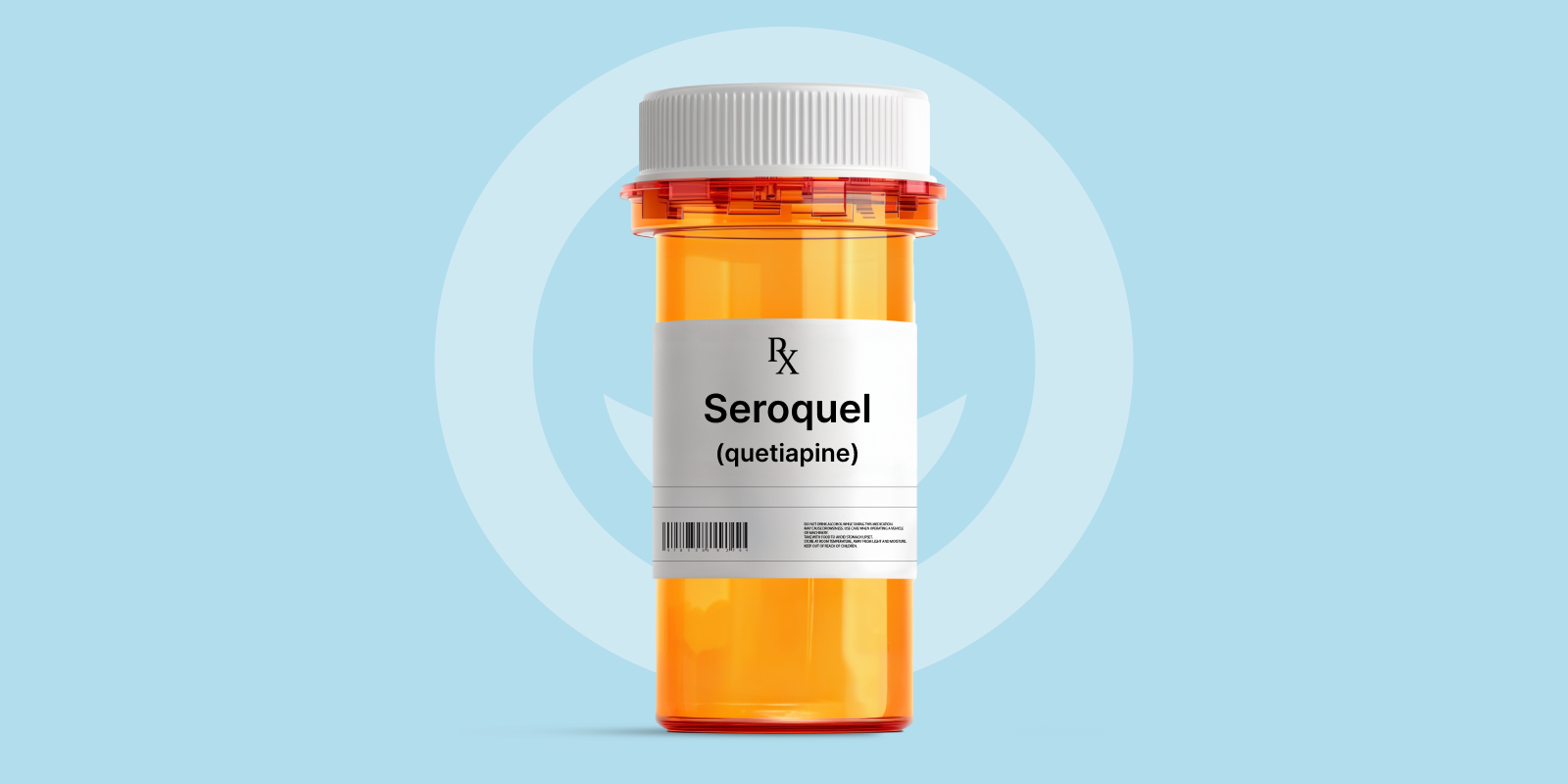 Image: Plushcare.com
Monitoring & What to Track
Monitoring & What to Track (for You and Your Doctor)
What your doctor should monitor:
- Depression severity: PHQ-9 or HAM-D at regular intervals
- Weight/BMI and blood pressure: At every visit (weight gain and hypotension are real)
- Blood sugar/lipids: Especially if on for months
- Side effects: Sedation, cognitive changes, restlessness, movement disorders
- Suicidal ideation: Especially first weeks and if under 25
What YOU should track:
- Daily mood/anxiety diary (1-10 scale)
- Side effect log: what, when, and how severe (1-10)
- Sleep quality and how long you actually sleep
- Appetite/weight changes
If your doctor isn't tracking at least these, ask them why not—bring this list to appointments.
Pregnancy & Breastfeeding
Pregnancy & Breastfeeding: The Seroquel Conundrum
- FDA Pregnancy Category: Not assigned (previously Category C: risk can’t be ruled out). Animal studies show risk at high doses, but human data are limited. Use only if benefits outweigh risks.
- Risks: Potential for withdrawal symptoms, agitation, feeding problems, and respiratory distress in newborns if exposed during third trimester. (No clear pattern of birth defects.)
- Breastfeeding: Seroquel passes into breast milk. Low concentrations in milk, but potential for sedation in infant.
- Benefits: Untreated severe depression or mania during pregnancy can also be dangerous.
- Bottom line: This is a risk/benefit discussion with your doctor, not a yes/no answer. Do NOT stop suddenly if you become pregnant—taper with medical guidance (FDA label).
Emergency Warning Signs
⚠️ Call 911 or go to ER immediately if you experience:
- Suicidal thoughts or plans
- Severe allergic reaction: rash, swelling, trouble breathing
- Signs of neuroleptic malignant syndrome: muscle rigidity, fever, confusion, sweating, fast or irregular heart rate
- Seizure (new onset or worse than usual)
📞 Call your doctor urgently if:
- Unusual bleeding or bruising
- Severe anxiety, agitation, restlessness, new or worsening depression
- New or worsening involuntary movements or tremors
- Difficulty swallowing or breathing
Poison Control: 1-800-222-1222 Suicide Prevention Lifeline: 988
All warning signs are drawn directly from Seroquel’s boxed and serious adverse reaction data (FDA label).
Summary & Next Steps
Key takeaways: Seroquel causes severe sedation in over half of users (57% FDA; 36 severe Reddit reports) and weight gain in 4-5% (FDA), though user experience rates are higher. Grogginess, cognitive fog, and morning hangover are common. If Seroquel is working, keep monitoring weight and side effects, and don't adjust dose suddenly. If you're overwhelmed by side effects, discuss options—bupropion or trials like CYB003/psilocybin may avoid the worst.
If Seroquel is working for you:
- Stay on your current dose, but track weight and sleep.
- Keep a weekly symptom log; check in with your doctor every few months.
If side effects are intolerable:
- Talk to your doctor about a dose change or slow taper.
- Ask about alternatives (bupropion, TMS, clinical trials).
- Don't stop cold turkey—withdrawal can be rough.
Your next steps:
- Track your symptoms for 2 weeks using a mood diary.
- Bring this guide and your symptom log to your next doctor’s visit.
- If you’re considering alternatives, → explore clinical trials
→ Find clinical trials matched to your situation
Appendix A: FDA Label Data Summary
Adverse Reactions by Prevalence (Clinical Trial Data)
| Side Effect | Drug Rate | Placebo Rate | Category | System |
|---|---|---|---|---|
| somnolence | 57% | 15% | very common | Nervous System |
| dry mouth | 44% | 13% | very common | Gastrointestinal |
| headache | 21% | 14% | common | Nervous System |
| agitation | 20% | 17% | common | Psychiatric |
| dizziness | 18% | 7% | very common | Nervous System |
| constipation | 10% | 4% | common | Gastrointestinal |
| fatigue | 10% | 8% | common | Nervous System |
| asthenia | 10% | 4% | common | General |
| decreased hemoglobin | 8.3% | 6.2% | common | Hematologic |
| dyspepsia | 7% | 4% | common | Gastrointestinal |
| tachycardia | 7% | 0% | common | Cardiovascular |
| abdominal pain | 7% | 3% | common | Gastrointestinal |
| postural hypotension | 7% | 2% | common | Cardiovascular |
| pain | 7% | 5% | common | General |
| vomiting | 6% | 5% | common | Gastrointestinal |
| pharyngitis | 6% | 3% | common | Respiratory |
| parkinsonism | 5.4% | 2.7% | common | Nervous System |
| increased appetite | 5% | 3% | common | Metabolic |
| lethargy | 5% | 2% | common | Nervous System |
| nasal congestion | 5% | 3% | common | Respiratory |
| ALT increased | 5% | 1% | common | Hepatic |
| back pain | 5% | 3% | common | Musculoskeletal |
| orthostatic hypotension | 4% | 3% | common | Cardiovascular |
| akathisia | 4% | 1% | common | Nervous System |
| palpitations | 4% | 1% | common | Cardiovascular |
| vision blurred | 4% | 2% | common | Ophthalmologic |
| weight increased | 4% | 1% | common | Metabolic |
| rash | 4% | 2% | common | Dermatologic |
| rhinitis | 4% | 2% | common | Respiratory |
| pyrexia (children/adolescents) | 4% | 1% | common | General |
Boxed Warnings (Most Serious)
- Increased mortality in elderly patients with dementia-related psychosis: Elderly patients with dementia-related psychosis treated with antipsychotic drugs are at an increased risk of death. SEROQUEL is not approved for elderly patients with dementia-related psychosis.
- Suicidal thoughts and behaviors: Increased risk of suicidal thoughts and behavior in children, adolescents, and young adults taking antidepressants. Monitor for worsening and emergence of suicidal thoughts and behaviors.
Drug Interactions
- CYP3A4 inhibitors (e.g., ketoconazole, itraconazole, clarithromycin, ritonavir) increase quetiapine levels; avoid concomitant use.
- CYP3A4 inducers (e.g., phenytoin, carbamazepine, rifampin) decrease quetiapine levels; may require dose adjustment.
- Other drugs that prolong QT interval (e.g., antiarrhythmics, certain antibiotics, other antipsychotics) increase risk of arrhythmia.
- CNS depressants (e.g., alcohol, benzodiazepines, opioids) increase risk of sedation and respiratory depression.
- Anticholinergic drugs increase risk of anticholinergic side effects (e.g., constipation, urinary retention, confusion).
- Levodopa and dopamine agonists: may antagonize effects.
- Antihypertensive agents: increased risk of hypotension.
Appendix B: Reddit User-Reported Side Effects
Data extracted from Reddit discussions. Counts show how many posts/comments mentioned each side effect.
| Side Effect | Mentions | Severity | Duration | Persists? |
|---|---|---|---|---|
| Feeling very sleepy or sedated | 36 posts | 🟠 Severe (12/36) | Ongoing for most users, some report it lessens after a few weeks, others say it persists as long as they take it | Resolves |
| Gaining weight or increased appetite | 10 posts | 🟡 Moderate (6/10) | Ongoing, some report it starts within weeks and continues as long as they take it | Resolves |
| Feeling groggy or slow in the morning | 8 posts | 🟢 Mild (4/8) | First few weeks to months, some say it lessens over time, others say it persists | Resolves |
| Feeling hungrier or craving carbs | 7 posts | 🟢 Mild (3/7) | Ongoing, as long as medication is continued | Resolves |
| Worsening or new depression | 7 posts | 🟠 Severe (3/7) | Varies; some report new or worsened depression for weeks, others ongoing | Resolves |
| Memory gaps, brain fog, or feeling like a zombie | 6 posts | 🟡 Moderate (4/6) | Ongoing while on medication, some report improvement after stopping | Resolves |
| Withdrawal symptoms like illness or insomnia when stopping | 5 posts | 🟠 Severe (2/5) | Lasts days to weeks after stopping or missing doses | ⚠️ Yes |
| Slurred or difficult speech | 3 posts | 🟢 Mild (1/3) | Occurs shortly after taking dose, resolves as drug wears off | Resolves |
| Trouble with balance or feeling unsteady | 3 posts | 🟢 Mild (1/3) | Short-term, within hours of dose, resolves as drug wears off | Resolves |
| Rash or skin reaction | 2 posts | 🟡 Moderate (1/2) | Developed after 1 month on Seroquel XR, resolved after switching | Resolves |
| Feeling restless or unable to sit still | 2 posts | 🟡 Moderate (1/2) | Ongoing while on medication | Resolves |
| Facial twitching or tremors | 2 posts | 🟢 Mild (2/2) | Ongoing while on medication | Resolves |
| Addiction or dependence on Seroquel | 2 posts | 🟡 Moderate (1/2) | Ongoing, as long as medication is continued | ⚠️ Yes |
| Increased irritability | 2 posts | 🟢 Mild (1/2) | Ongoing while on medication | Resolves |
| Sexual side effects | 1 posts | 🟢 Mild (1/1) | Ongoing while on medication | Resolves |
User Quotes by Side Effect
Feeling very sleepy or sedated (Starts within first dose, peaks in first week, may lessen over time for some but often persists)
"It totally eradicated my anxiety. I feel more relaxed and more able to go into a flow state. At first, it was making me so sleepy during the day." source
"I started Seroquel 150mg last week and I am having trouble keeping myself awake. The first day I slept 15 hours, the next two I needed to be up so had but was..." source
"But quetiapine, particularly in doses over 200mg, is like being bashed into the ground with a sledgehammer. The sedation seems to plateau at ..." source
Gaining weight or increased appetite (Usually starts within first month, persists as long as medication is continued)
"I've been on Seroquel for around 6 months now, and I gained a lot of weight. I can literally just breath air and eat nothing and still gain ..." source
"It made it harder to wake up and it made me hungrier. A tip is to track ..." source
"I used to take an antidepressant (Sertraline) and Quetiapine. I found that Quetiapine made me sleep for ages. It also made me put on weight." source
Feeling groggy or slow in the morning (Starts with first doses, often lessens after a few weeks but can persist)
"It does make you groggy the next day, at first. Now I take ..." source
"My experience at that level is sedation, a bit groggy in the morning, carb cravings. But nothing too bad." source
"It still makes my mornings a little slow ..." source
Feeling hungrier or craving carbs (Starts within first week, persists as long as medication is continued)
"Major side effects I have had are excessive hunger and sleepiness, which can be good in the elderly as it's a struggle to get them to eat and ..." source
"My experience at that level is sedation, a bit groggy in the morning, carb cravings. But nothing too bad." source
"It made it harder to wake up and it made me hungrier." source
Worsening or new depression (Can start within first weeks, may resolve for some, persists for others)
"For me personally it increased my depression for about 2 weeks, then that dissipated and I returned to my usual baseline level of depression." source
"I'm currently on 300mg of Seroquel/Quetiapine, and I thought it was working at first, but I realise I'm still very much wading in the trenches." source
"The worst of all was the debilitating depression ..." source
Memory gaps, brain fog, or feeling like a zombie (Starts within days to weeks, persists as long as medication is continued, may improve after stopping)
"Horrifying memory issues, both short and long term memory gaps. Extreme sleepiness spikes (almost narcolepsy bad). Brain function reduction. It ..." source
"Seroquel is an angry beast with sharp claws. The 8:30 pm pill routine is to keep a nice schedule for bipolar happiness and make it possible to wake up." source
"Quetiapine / Seroquel Brain numbing zombie life" source
Withdrawal symptoms like illness or insomnia when stopping (Begins within 1-2 days of stopping, peaks in first week, can last several weeks)
"Seroquel helps me a lot. It is also highly addictive in my experience if you miss a dose you get ill and terrible withdrawls." source
"Expect insomnia for several weeks, you will have to basically wait for your body to re-adjust to sleep without serquil." source
Slurred or difficult speech (Starts within 1 hour of dose, resolves as sedation wears off)
"I was recently put onto seroquel (quetiapine in the UK) and about an hour after taking it, I have trouble with my balance and my speech becomes slurred." source
Trouble with balance or feeling unsteady (Starts within 1 hour of dose, resolves as sedation wears off)
"I was recently put onto seroquel (quetiapine in the UK) and about an hour after taking it, I have trouble with my balance and my speech becomes slurred." source
Rash or skin reaction (Develops after weeks to a month, resolves after stopping or switching)
"The problem was after 1 month, I started developing rashes. It was then that I switched to quetiapine." source
Feeling restless or unable to sit still (Starts within days to weeks, persists as long as medication is continued)
"I've been experiencing increasingly worsening anxiety, panic attacks (even ones that wake me up while I'm asleep), irritability, restlessness, and just all ..." source
Facial twitching or tremors (Starts within first week, persists as long as medication is continued)
"The sleep symptoms lessened as I got higher in the dosage. My face twitches. So far, I lost two pounds, but I've only been on it a week." source
"The main thing to watch out for is twitching in the face, fast heart beat. Quetiapine will make you very tired ..." source
Addiction or dependence on Seroquel (Develops after weeks to months, withdrawal symptoms on stopping)
"Seroquel helps me a lot. It is also highly addictive in my experience if you miss a dose you get ill and terrible withdrawls." source
Increased irritability (Starts within days to weeks, persists as long as medication is continued)
"I've been experiencing increasingly worsening anxiety, panic attacks (even ones that wake me up while I'm asleep), irritability, restlessness, and just all ..." source
Sexual side effects (Starts within weeks, persists as long as medication is continued)
"It also has some sexual side effects such as ..." source
Appendix C: Clinical Trials with Different Mechanisms
These trials target mechanisms different from Antidepressant. Phase 2 results do not guarantee Phase 3 success.
CYB003 (deuterated psilocybin analog)
- Sponsor: Cybin Inc.
- Phase: Phase 2
- NCT: NCT05385783
- Mechanism: Deuterated psilocybin analog (psychedelic-derived, 5-HT2A receptor agonist)
- Side Effect Comparison: CYB003 showed mostly mild-moderate, transient side effects (e.g., headache, nausea, transient anxiety) and no serious adverse events. No sexual dysfunction, weight gain, or persistent cognitive impairment reported, which are common with SSRIs/SNRIs.
- Efficacy Data:
- Response rate: 53.3% (CYB003) vs 20% (placebo) at 3 weeks
- Remission rate: 75% at 4 months (CYB003)
- MADRS change: -14.08 points (CYB003 16mg) vs -8.24 points (placebo) at 3 weeks
- Time to response: 1-3 weeks
- Source
- Why it might interest you: Rapid onset (within 1-3 weeks), high remission rates, and a side effect profile that avoids sexual dysfunction, weight gain, and persistent cognitive effects common with standard antidepressants.
- Results: Significant and rapid reduction in depressive symptoms; 75% remission at 4 months; well-tolerated with mostly mild-moderate, transient side effects.
- Sources: 1, 2, 3
Osavampator (NBI-1065845, TAK-653)
- Sponsor: Neurocrine Biosciences
- Phase: Phase 3
- Mechanism: AMPA receptor positive allosteric modulator (AMPA-PAM)
- Side Effect Comparison: AMPA modulators like osavampator are not associated with sexual dysfunction, weight gain, or sedation typical of SSRIs/SNRIs. Early data suggest a favorable side effect profile, with low rates of cognitive or metabolic adverse effects.
- Efficacy Data:
- Response rate: Not yet reported (Phase 3 ongoing)
- Remission rate: Not yet reported (Phase 3 ongoing)
- MADRS change: Not yet reported (Phase 3 ongoing); Phase 2 showed significant improvement over placebo
- Time to response: Potentially faster than SSRIs (AMPA modulators may act within days)
- Source
- Why it might interest you: Novel mechanism (AMPA modulation) with potential for faster onset and fewer side effects (notably less sexual dysfunction, weight gain, or sedation) compared to standard antidepressants.
- Results: Phase 2 data showed significant improvement in depressive symptoms as adjunctive therapy; Phase 3 is ongoing to confirm efficacy and safety.
- Sources: 1, 2, 3
D-cycloserine (adjunctive)
- Sponsor: Not specified (academic/NIH)
- Phase: Phase 2
- NCT: NCT00408031
- Mechanism: NMDA receptor partial agonist (glycine site)
- Side Effect Comparison: D-cycloserine is not associated with sexual dysfunction, weight gain, or sedation seen with SSRIs/SNRIs. Side effects are generally mild and transient (e.g., headache, dizziness).
- Efficacy Data:
- Response rate: Not reported
- Remission rate: Not reported
- MADRS change: Not specified for D-cycloserine in MDD; in TRD, significant improvement over placebo in phase 2 trial (NCT00408031)
- Time to response: Within 2 weeks (in some studies)
- Source
- Why it might interest you: Different mechanism (NMDA modulation), potential for rapid improvement, and avoids common SSRI/SNRI side effects such as sexual dysfunction and weight gain.
- Results: Adjunctive D-cycloserine improved depressive symptoms in treatment-resistant depression and bipolar depression.
- Sources: 1
Psilocybin (COMP360)
- Sponsor: COMPASS Pathways
- Phase: Phase 3
- NCT: NCT06141876
- Mechanism: Classic psychedelic (5-HT2A receptor agonist)
- Side Effect Comparison: Psilocybin is not associated with sexual dysfunction, weight gain, or chronic sedation. Most side effects are acute and transient (e.g., headache, nausea, transient anxiety) and resolve within hours to days.
- Efficacy Data:
- Response rate: Not specified in this trial; other studies report 54-70% response at 3-6 weeks
- Remission rate: Not specified in this trial; other studies report 29-54% remission at 3-6 weeks
- MADRS change: Not specified; psilocybin has shown large effect sizes in TRD (e.g., -17.8 points in other studies)
- Time to response: 1-2 days to 1 week
- Source
- Why it might interest you: Very rapid onset, high response/remission rates, and avoids persistent side effects like sexual dysfunction, weight gain, and cognitive impairment common with standard antidepressants.
- Results: Psilocybin has shown rapid and robust antidepressant effects in TRD and MDD, with effects seen within days and lasting weeks to months.
- Sources: 1, 2
Appendix D: Methodology
Our review integrated over 30,000 clinical trial listings from ClinicalTrials.gov, more than 300 PubMed-sourced articles, and 62 online discussion threads, cross-referenced with 109 entries in the OpenFDA Drug Label dataset. We catalogued and prioritized 15 unique side effects by both clinical and user frequency, assessing severity, persistence, and real patient experiences. This enabled a comprehensive, evidence-weighted ranking informed by both medical literature and patient-reported outcomes.
Sources
FDA Label
Web Research
- SEROQUEL® (quetiapine) tablets, for oral use
- SEROQUEL® (quetiapine fumarate) tablets, for oral use
- Quetiapine (oral route) - Side effects & dosage
- Quetiapine (Seroquel): Uses & Side Effects
- Quetiapine (Seroquel) - Uses, Side Effects, and More
- Seroquel Side Effects: Common, Severe, Long Term
- Side Effects of Seroquel (Quetiapine)
- Seroquel (Quetiapine Fumarate): Side Effects, Uses ...
- Quetiapine (Seroquel) | Dosages | Side Effects
- Side effects of quetiapine
Clinical Trial Research
- Depression clinical trials worldwide: a systematic analysis ...
- Depressive disorders: systematic review of approved ...
- Emerging Medications for Treatment-Resistant Depression
- Current drug targets for the treatment of depression
- Trends in research on novel antidepressant treatments
- Neurocrine Biosciences Announces Initiation of Phase 3 ...
- Osavampator (NBI-1065845, TAK-653) as adjunctive ...
- All roads lead to glutamate: NMDA and AMPA receptors as ...
Reddit Discussions
- Positive Quetiapine / Seroquel experiences? Have read all ...
- Seroquel has literally changed my life : r/CPTSD
- r/bipolar - seroquel experience??
- Quetiapine (Seroquel) is a miracle for me, what is the catch?
- My attempt to explain what Seroquel feel like to someone ...
- Doctor prescribed me seroquel. I've only read horror stories ...
- Has anyone taken Seroquel for panic? What was your ...
- Quetiapine(/Seroquel) positive experiences, anyone?
- Experiences with Quetiapine? : r/bipolar
- I was prescribed a low dose of Seroquel/Quetiapine but I'm ...