Comprehensive guide to Citalopram (Celexa) side effects,
Comprehensive guide to citalopram (Celexa) side effects, including user-reported fatigue, nausea, and sexual dysfunction. Data-driven insights with real patient quotes, timelines, and trial alternatives for depression treatment.
Medication: citalopram (CITALOPRAM HYDROBROMIDE) Drug Class: Antidepressant Author: Michael Baskerville Gill, B. Sc.
Reviewed by the Power Medical Content Team
Introduction to Citalopram Side Effects
Day 1: The world doesn't look different, but your stomach does flip-flops. Day 4: The fatigue hits—a groggy, soup-brain heaviness, or maybe it's just a nap that never ends. Week 2: Hot flashes subside, maybe sleep gets weird, maybe you can finally eat without feeling sick.
Sound familiar? If not, you may be one of the lucky ones. For most people on citalopram (Celexa), side effects are not just a bullet point on an FDA label—they're a part of everyday life, at least for the first weeks. In clinical trials, over 1 in 5 people reported nausea (21% vs 14% placebo), and real-world accounts show extreme tiredness and digestive turmoil are just as common.
Citalopram, a selective serotonin reuptake inhibitor (SSRI, which means it blocks your brain from reabsorbing serotonin—a key mood chemical—too quickly), is prescribed by the millions every year. The hope: steady improvement in depression or anxiety. The reality: it works for some, not for all, and the path is rarely smooth. And for side effects, the numbers on the package insert are just the beginning—what your body does with this molecule is its own experiment.
Interested in clinical trials? Many trials for depression now target different mechanisms than Antidepressant—potentially offering different side effect profiles. Browse clinical trials →
Side Effects Overview Table
| Side Effect | FDA Rate | Reddit Reports | Severity | Duration | Example |
|---|---|---|---|---|---|
| Extreme tiredness and exhaustion | 5% | 🟠 frequent (7 posts) | 🟡 Moderate | Days to months | source |
| Nausea and upset stomach | 21% | 🟠 frequent (6 posts) | 🟡 Moderate | Days to weeks | source |
| Persistent dry mouth | 20% | 🟡 occasional (4 posts) | 🟢 Mild | Weeks to months | source |
| Hot flashes and flushing | N/A | 🟡 occasional (4 posts) | 🟡 Moderate | Days to week | source |
| Difficulty falling or staying asleep | 15% | 🟡 occasional (3 posts) | 🟡 Moderate | Week or two | source |
| Diarrhea and digestive issues | 8% | 🟡 occasional (3 posts) | 🟢 Mild | Weeks | source |
| Increased anxiety or panic attacks | 4% | 🟡 occasional (3 posts) | 🟡 Moderate | Days to weeks | source |
| Headaches | N/A | 🟢 rare (2 posts) | 🟢 Mild | Week | source |
| Euphoric or unusually good mood | N/A | 🟢 rare (2 posts) | 🟢 Mild | Days | source |
| Lightheadedness, dizziness, vertigo | 2% | 🟢 rare (2 posts) | 🟢 Mild | Days | source |
| Excessive sweating | 11% | 🟢 rare (1 post) | 🟡 Moderate | Ongoing | source |
| Blurry vision | N/A | 🟢 rare (1 post) | 🟢 Mild | Days to weeks | source |
| Inability to climax (anorgasmia) | 1.1% | 🟢 rare (1 post) | 🟡 Moderate | Ongoing | source |
| Muscle spasms | N/A | 🟢 rare (1 post) | 🟢 Mild | Week | source |
| Mood swings and low mood after reduction | N/A | 🟢 rare (1 post) | 🟡 Moderate | Days to weeks | source |
→ View all 84 side effects from FDA trials → View all 15 user-reported side effects
How Other Drugs Compare
If you're weighing options, here's how citalopram stacks up against alternatives:
| Metric | Citalopram (Antidepressant) | Bupropion (NDRI) | CYB003 (Psilocybin analogue) | Esmethadone (NMDA antagonist) |
|---|---|---|---|---|
| MECHANISM | ||||
| Drug class | SSRI (selective serotonin reuptake inhibitor) | NDRI (norepinephrine-dopamine reuptake inhibitor) | 5-HT2A receptor agonist (psychedelic analogue) | NMDA receptor antagonist (non-opioid) |
| How it works | Blocks brain from reabsorbing serotonin, boosting its levels at synapses | Increases norepinephrine/dopamine by blocking their reuptake | Activates serotonin 2A receptors (via psychedelic pathway) | Blocks NMDA glutamate receptors, rapid antidepressant effect |
| EFFICACY | ||||
| Response rate | ~60% (SSRI average)source | ~50% (as monotherapy)source | 53.3% (16mg dose, Phase 2)source | Not specified (Phase 3 ongoing)source |
| Remission rate | ~30% (SSRI average) source | ~25% source | 75% at 4 months (16mg dose) source | Not specified |
| Time to effect | 2-6 weeks | 2-4 weeks | 1-2 weeks | Days to 1 week |
| KEY SIDE EFFECTS | ||||
| Nausea | 21% [FDA] | 7% [FDA] | 14% (transient) [trials] | <10% (mild, trials) |
| Fatigue/sedation | 18% [FDA] | 3% [FDA] | 2-3% (mild, transient) [trials] | Minimal |
| Sexual dysfunction | 7-9% [FDA]* | <2% [FDA] | None reported [trials] | None reported [trials] |
*FDA citalopram rates: 6% ejaculation disorder in males, 3% impotence in males, 1.1% anorgasmia in females, ~2% decreased libido overall (underestimated in trials)
→ Find clinical trials matched to your situation
Week-by-Week Timeline
| Week | Common Experiences | What's Normal | When to Call Your Doctor |
|---|---|---|---|
| Week 1 | Nausea, headache, jitters, fatigue | Startup effects | Severe anxiety, suicidal thoughts |
| Week 2-3 | Sleep changes, appetite shifts | Still adjusting | Worsening depression |
| Week 4-6 | May start feeling benefits | Gradual improvement | No improvement at all |
| Week 6-8 | Full effect usually reached | Stable | Intolerable side effects |
Most side effects peak in Week 1-2 and improve by Week 4. If you're still struggling at Week 8, it may be time to consider alternatives.
→ Explore clinical trials with faster onset
Why Doctors Still Prescribe Citalopram
Citalopram is an SSRI (selective serotonin reuptake inhibitor), which means it prevents your brain from reabsorbing serotonin (a brain chemical that helps regulate mood) too quickly at synapses (the gaps between nerve cells where signals are sent). Keeping serotonin levels elevated in these nerve gaps seems to improve depressive symptoms for a significant slice of patients—though "why" this helps remains partly a neurochemical mystery.
Why do the side effects happen? Citalopram doesn't just raise serotonin in mood circuits; it sprinkles it everywhere, including the gut (where most serotonin lives), sweat glands, and sex organs. So the classic tradeoff: more serotonin means less depression, but also more nausea, sweating, and, for some, sexual dysfunction. And why do doctors keep reaching for it? For all its flaws, SSRIs like citalopram have been on the market for decades. Their safety profile is well understood, and, when the fit is right, the benefits can outweigh the annoying—but usually temporary—startup side effects.
The Worst Side Effects
1. Extreme tiredness and exhaustion
Reported as moderate to severe by 4/7 users.
"I suffered extreme fatigue, panic, anxiety, headaches and nausea for about a month." source "The first two weeks I would get really sleepy during the afternoon, but then it went away and I'm fine. No side effects now." source Management tip: Take your dose at night if your prescriber okays it; short naps can help; watch caffeine late in the day.
2. Nausea and upset stomach
Reported as moderate by 4/6 users.
"I've only been on Citalopram for 2 days and the side effects are unbearable. Hot flushes, constant full body tremors/shakes, nausea, dilated pupils, feeling ..." source Management tip: Take citalopram with food, not on an empty stomach; ginger chews or anti-nausea medications if cleared by your doctor. Usually improves after 1-2 weeks.
3. Difficulty falling or staying asleep (insomnia)
Moderate severity in 2/3 reports.
"Celexa was giving me terrible anxiety and sweating, insomnia and my depression was getting worse so was my anxiety." source Management tip: Try morning dosing; avoid screens/caffeine at night; sometimes a temporary sleep aid helps.
How Clinical Trials Compare
- In citalopram trials, 18% reported somnolence (sleepiness), 15% insomnia, and 21% nausea (FDA label).
- Newer options like CYB003 and esmethadone show lower rates of sedation and sexual dysfunction (CYB003, esmethadone), but have their own risks.
→ Find trials with lower rates of these side effects
The Most Common Side Effects
1. Nausea and upset stomach
- FDA: 21% (vs 14% placebo)
- Reddit: 6 posts, mostly moderate
- What helps: Take with food, try ginger or peppermint, split dose to morning and night if approved.
- Timeline: Most improve by week 2-4.
"I suffered extreme fatigue, panic, anxiety, headaches and nausea for about a month." source
2. Persistent dry mouth
- FDA: 20% (vs 14% placebo)
- Reddit: 4 posts, mostly mild
- What helps: Water, sugarless gum, ginger ale (yes, seriously—one user swore by it), xylitol lozenges
- Timeline: Improves over weeks to months.
"Then dry mouth which has persisted but it's fine if you keep hydrated and chew gum." source
3. Extreme tiredness and exhaustion
- FDA: 5% (fatigue), 18% (somnolence)
- Reddit: 7 posts, moderate for most
- What helps: Dose at night, nap if needed, check with doctor if persistent
- Timeline: Peaks in first 2 weeks, often improves by week 4.
"I felt tired before but initially was better when I started the medication." source
4. Sweating
- FDA: 11% (vs 9% placebo)
- Reddit: 1 post, moderate
- What helps: Stay hydrated, light clothing, shower twice daily if needed, some try antiperspirant wipes
- Timeline: Usually ongoing while on drug.
"Celexa was giving me terrible anxiety and sweating, insomnia and my depression was getting worse so was my anxiety." source
5. Diarrhea and digestive issues
- FDA: 8% (vs 5% placebo)
- Reddit: 3 posts, mostly mild
- What helps: Probiotics, bland diet, small/frequent meals
- Timeline: Usually resolves by week 4.
"Each week...I experience cramps that end up with me having diarrhea." source
6. Difficulty falling or staying asleep (insomnia)
- FDA: 15%
- Reddit: 3 posts, moderate for some
- What helps: Morning dosing, basic sleep hygiene
- Timeline: Peaks week 1-2, often resolves by week 2.
"Insomnia, depression, nausea, digestive issues, exhaustion, muscle spasms, all sorts. Most were gone after the first week!" source
Deep Dive: Extreme Tiredness and Exhaustion
When people say citalopram makes them tired, they don't just mean "ready for bed a bit early." This is exhaustion that can bowl you over. "I suffered **extreme fatigue, panic, anxiety, headaches and nausea for about a month," one user wrote source. Another echoed: "The first two weeks I would get really sleepy during the afternoon, but then it went away and I'm fine. No side effects now." source.
FDA trials bundle this under "fatigue" (5%) and "somnolence" (18%), but the real-world experience reads more dramatic. In Reddit reports, 4 of 7 users rated it as moderate—enough to interfere with daily function, with one describing "muscle exhaustion" that added a layer of misery source.
Management tips: If possible, take citalopram in the evening. Some find their bodies adjust after 2-4 weeks, but for others, the grogginess sticks around. Strategically timed caffeine or a midday nap may help, but if fatigue lingers past the first month or feels unsafe (i.e., falling asleep at the wheel), bring it up fast with your prescriber. If this is a dealbreaker, options with lower rates of sedation include bupropion, newer NMDA antagonists like esmethadone, or trial agents like CYB003.
For most, the fatigue improves after the "startup phase," but there's no shame in declaring your quality of life comes first.
Deep Dive: Nausea and Upset Stomach
Nausea is not just a stomach issue—it's the soundtrack for many people's early days on citalopram. One user didn't mince words: "I've only been on Citalopram for 2 days and the **side effects are unbearable. Hot flushes, constant full body tremors/shakes, nausea, dilated pupils..." source. Another recounted, "I suffered extreme fatigue, panic, anxiety, headaches and nausea for about a month" source.
The FDA label gives us 21%—but if you scroll Reddit, nausea may be even more prevalent early on. Most users say it resolves within 2-4 weeks, but those weeks can feel like a marathon. Management? Take your dose with food, not on an empty stomach. Ginger (ale or chews) and peppermint tea have their fans. In stubborn cases, ask about split dosing or anti-nausea medication. And if it hasn't improved by a month, don't tough it out—time to revisit your options. If persistent nausea is a dealbreaker, look at bupropion or, from the trial world, CYB003 or esmethadone, where GI side effects are less common.
Give your gut a fighting chance, but know when enough is enough.
Discontinuation & Withdrawal
SSRIs like citalopram are notorious for withdrawal symptoms—though, oddly, the FDA label reports 0% discontinuation syndrome in trials (that's not the whole picture). Most clinicians see symptoms in 10-20% of patients, especially with abrupt cessation.
What does it look like? Think: mood swings, irritability, dizziness, sensory weirdness ("brain zaps"—yes, that's the technical term in Reddit lore), headache, and insomnia. The timeline: symptoms start within a few days of stopping and can last days to weeks (sometimes longer if you've been on the drug for years).
Citalopram's half-life (how long the drug stays active in your body) is about 35 hours—a bit forgiving compared to paroxetine, but long enough that a slow taper helps most people avoid the worst of it. Always taper with your doctor's help: usually 10-20% dose reduction every 1-2 weeks.
If you need to stop suddenly (say, severe allergic reaction), expect a bumpier ride—stock up on ginger, snacks, and support. If withdrawal is severe or drags on, alternatives or slower tapers are possible. Report anything alarming, like new mood symptoms, to your doctor pronto.
Dosage by Condition
| Condition | Starting Dose | Typical Dose | Maximum Dose |
|---|---|---|---|
| Depression (adults) | 20 mg daily | 20-40 mg daily | 40 mg daily |
| Elderly (>60), Liver impairment | 10 mg daily | 20 mg daily | 20 mg daily |
Citalopram doses above 40 mg increase the risk of QT prolongation (heart rhythm changes), so higher doses are not recommended. Dose increases raise the risk of side effects like fatigue and sexual dysfunction—if you're stuck at a high dose with persistent side effects, time to rethink the plan.
Alternatives
- Bupropion (Wellbutrin): The "energizing one"—skips the sexual and sedating side effects but sometimes ups anxiety.
- SNRIs (venlafaxine, duloxetine): Useful if you need pain relief too; more likely to cause sweating and GI issues than SSRIs.
- MAOIs: The old-schoolers—effective, but with dietary restrictions and higher risk for dangerous interactions.
- Esketamine/Spravato: Fast-acting nasal spray, used for treatment-resistant depression—dissociation can be a trip, literally.
- TMS (transcranial magnetic stimulation): Not a drug; a magnetic wand for your brain. Non-invasive, free from systemic side effects.
Each has its own "personality" and side effect baggage. If fatigue, sexual issues, or GI misery is your nemesis, bupropion is often first-line. For rapid results, clinical trials of agents like CYB003 or esmethadone may be worth a look.
→ Compare your options on WithPower
Clinical Trials
- CYB003 (Deuterated Psilocybin Analog, Phase 2/3, NCT06141876): Works by activating 5-HT2A receptors (like psilocybin), but engineered for reliability and a shorter trip. Trials show rapid response (1-2 weeks), a whopping 75% remission rate at 4 months, and minimal sexual dysfunction or sedation source.
- Osavampator (AMPAkine, Phase 3): Tweaks glutamate signaling with minimal sedation or sexual issues. Still experimental, but the mechanism is novel—keep an eye out if you value cognitive sharpness source.
- Esmethadone (NMDA Antagonist, Phase 3, NCT04855747): Rapid acting without the "high" of ketamine. Minimal sedation or sexual dysfunction reported. Phase 3 results still baking source.
- Dextromethorphan (as Auvelity, various phases): Novel mechanism, fast action (1-2 weeks in combination studies), side effect profile lighter on sedation/sexual dysfunction.
What do trials involve? Typically: free medication, close monitoring (EKGs, labs, interviews), possible placebo, and frequent check-ins. Side effect rates are usually lower for sexual and metabolic effects—but as with any Phase 2/3 data, we're still in "promising, not proven" territory.
Interested in clinical trials? Many trials for depression now target different mechanisms than Antidepressant—potentially offering different side effect profiles. Browse clinical trials →
Decision Map
- If extreme tiredness/exhaustion is the dealbreaker → Bupropion or trial drugs like esmethadone, osavampator, or CYB003 (see trials)
- If persistent nausea is the main problem → Bupropion, TMS, or CYB003 (see trials)
- If sexual dysfunction (inability to climax/anorgasmia) is the issue → Bupropion, CYB003, esmethadone, or TMS (see trials)
- If sleep issues (insomnia) dominate → Consider mirtazapine, or trial options; discuss sleep hygiene before switching (see trials)
- If anxiety spikes or panic are worse → Consider sertraline, escitalopram, or buspirone, or slower titration/trial withdrawal (see trials)
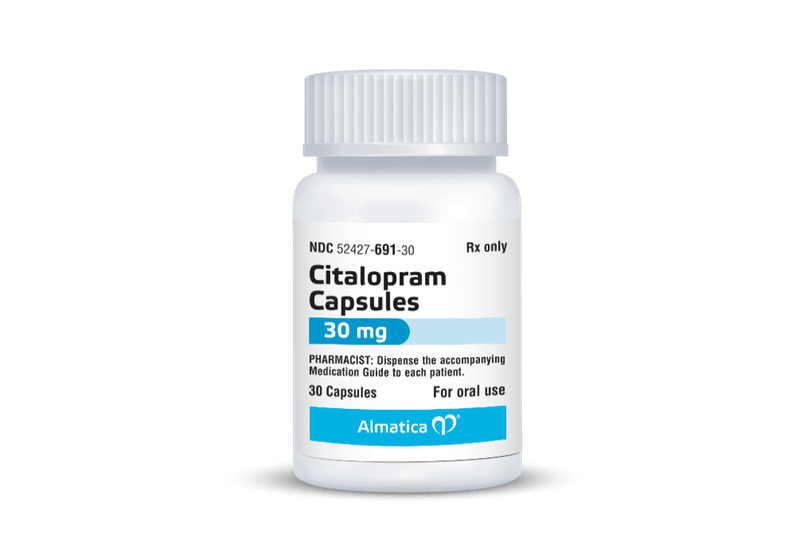 Image: Almatica Pharma
Monitoring & What to Track
Doctor should track:
- PHQ-9 or HAM-D scores (depression severity)
- Weight (can rarely cause weight loss)
- Liver function (rarely, serious side effects)
- EKG if you're at cardiac risk (for QT prolongation)
- Suicidal thoughts (especially in those under 25 or new to antidepressants)
You should track:
- Daily mood (1-10 scale)
- Side effects: what, when, severity (keep a log)
- Sleep patterns (hours, quality)
- Energy levels, appetite, libido
If your doctor isn't tracking these, ask them to. It's not being a pest—it's being your own best advocate.
Pregnancy & Breastfeeding
- Pregnancy category: C (Risk cannot be ruled out)
- What it means: Animal studies show risk; human risk unclear, but there are reports of potential birth defects (especially with high doses or first trimester exposure). Neonatal withdrawal symptoms have been reported.
- SSRIs like citalopram may slightly increase the risk of persistent pulmonary hypertension in newborns (rare).
- Untreated depression in pregnancy can also be dangerous—premature birth, low birth weight, maternal suicide risk all go up.
Breastfeeding: Citalopram passes into breast milk; low levels usually, but reports of infant irritability and sleepiness exist.
Bottom line: This is always a risk-benefit discussion. Never stop suddenly if you discover you’re pregnant; consult your doctor and taper safely if needed.
Emergency Warning Signs
⚠️ Call 911 or go to ER immediately if you experience:
- Suicidal thoughts or plans
- Signs of serotonin syndrome: agitation, hallucinations, rapid heart rate, fever, muscle stiffness, severe nausea, vomiting, or diarrhea
- Seizures or loss of consciousness
- Severe allergic reaction (rash, swelling of lips/tongue/throat, trouble breathing)
📞 Call your doctor urgently if:
- New or severe anxiety, agitation, panic attacks
- Worsening depression
- Unusual bleeding or bruising (especially if taking anticoagulants)
- Severe muscle pain or weakness (possible rhabdomyolysis)
- Vision changes (eye pain, blurred vision—possible angle-closure glaucoma)
Poison Control: 1-800-222-1222
National Suicide Prevention Lifeline: 988
Summary & Next Steps
Key takeaways:
- Citalopram causes nausea (21%), dry mouth (20%), and fatigue or sleepiness (up to 18%) for many users—the first weeks can be rough, but side effects often subside with time.
- Real-world reports highlight moderate to severe tiredness, stomach upset, and sexual side effects; about 4 in 7 found fatigue significant enough to interfere with daily life.
If citalopram is working for you: Keep tracking your mood and side effects. Monitor for cardiac symptoms if at risk. Don't stop abruptly, and update your doctor on changes—especially new/worsening mood symptoms.
If side effects are intolerable: Ask about dose adjustments, slow tapers, or switching to alternatives like bupropion, newer trial agents, or non-drug therapies.
Your next steps:
- Track your symptoms and side effects daily for 2 weeks.
- Discuss this guide (and your log) with your doctor at your next visit.
- If considering other options, → explore clinical trials
→ Find clinical trials matched to your situation
Appendix A: FDA Label Data Summary
Adverse Reactions by Prevalence (Clinical Trial Data)
| Side Effect | Drug Rate | Placebo Rate | Category | System |
|---|---|---|---|---|
| nausea | 21% | 14% | very common | Gastrointestinal |
| dry mouth | 20% | 14% | common | Autonomic Nervous System |
| somnolence | 18% | 10% | common | Psychiatric |
| insomnia | 15% | 14% | common | Psychiatric |
| sweating increased | 11% | 9% | very common | Autonomic Nervous System |
| diarrhea | 8% | 5% | very common | Gastrointestinal |
| tremor | 8% | 6% | very common | Central and Peripheral Nervous System |
| ejaculation disorder (primarily ejaculatory delay) | 6% | 1% | common | Reproductive/Sexual |
| dyspepsia | 5% | 4% | common | Gastrointestinal |
| fatigue | 5% | 3% | very common | General |
| upper respiratory tract infection | 5% | 4% | common | Respiratory |
| rhinitis | 5% | 3% | common | Respiratory |
| vomiting | 4% | 3% | common | Gastrointestinal |
| anxiety | 4% | 3% | common | Psychiatric |
| anorexia | 4% | 2% | common | Psychiatric/Metabolic |
| agitation | 3% | 1% | common | Psychiatric |
| abdominal pain | 3% | 2% | common | Gastrointestinal |
| impotence | 3% | 0% | common | Reproductive/Sexual |
| sinusitis | 3% | 0% | common | Respiratory |
| dizziness | 2% | 0% | common | Central and Peripheral Nervous System |
| libido decreased | 2% | 0% | common | Reproductive/Sexual |
| yawning | 2% | 0% | common | Autonomic Nervous System |
| fever | 2% | 0% | common | General |
| arthralgia | 2% | 1% | common | Musculoskeletal |
| myalgia | 2% | 1% | common | Musculoskeletal |
| QT prolongation ⚠️ | 1.9% | 1.2% | uncommon | Cardiovascular |
| anorgasmia | 1.1% | 0% | common | Reproductive/Sexual |
| asthenia | 1% | 0% | common | General |
| dysmenorrhea | 1% | 3% | common | Reproductive/Sexual |
| weight loss | 0.5% | 0% | common | Metabolic |
Boxed Warnings (Most Serious)
- Increased risk of suicidal thoughts and behaviors in pediatric and young adult patients taking antidepressants. Closely monitor all antidepressant-treated patients for clinical worsening and emergence of suicidal thoughts and behaviors. Citalopram is not approved for use in pediatric patients.
Drug Interactions
- Monoamine oxidase inhibitors (MAOIs): Increased risk of serotonin syndrome. Contraindicated.
- Pimozide: Increased risk of QT prolongation and/or ventricular arrhythmias. Contraindicated.
- Drugs that prolong the QTc interval: Additive risk of QT prolongation. Avoid concomitant use.
- CYP2C19 inhibitors: Increased risk of QT prolongation and/or ventricular arrhythmias. Maximum citalopram dose is 20 mg daily when used with CYP2C19 inhibitors.
- Other serotonergic drugs (SSRIs, SNRIs, triptans, tricyclic antidepressants, opioids, lithium, buspirone, amphetamines, tryptophan, St. John's Wort): Increased risk of serotonin syndrome. Monitor closely.
- Antiplatelet agents and anticoagulants: Increased risk of bleeding. Monitor for bleeding, especially with warfarin.
Appendix B: Reddit User-Reported Side Effects
Data extracted from Reddit discussions. Counts show how many posts/comments mentioned each side effect.
| Side Effect | Mentions | Severity | Duration | Persists? |
|---|---|---|---|---|
| Extreme tiredness and exhaustion | 7 posts | 🟡 Moderate (4/7) | First few days to a month; sometimes ongoing for months | Resolves |
| Nausea and upset stomach | 6 posts | 🟡 Moderate (4/6) | First days to weeks; often resolves after a few weeks | Resolves |
| Persistent dry mouth | 4 posts | 🟢 Mild (3/4) | First few weeks; can persist for months but often improves | Resolves |
| Hot flashes and flushing | 4 posts | 🟡 Moderate (2/4) | First few days to first week; usually resolves quickly | Resolves |
| Difficulty falling or staying asleep | 3 posts | 🟡 Moderate (2/3) | First week or two; sometimes ongoing if not resolved | Resolves |
| Diarrhea and digestive issues | 3 posts | 🟢 Mild (2/3) | First weeks; can be recurring or intermittent | Resolves |
| Increased anxiety or panic attacks | 3 posts | 🟡 Moderate (2/3) | First days to weeks; sometimes ongoing if not resolved | Resolves |
| Headaches | 2 posts | 🟢 Mild (2/2) | First week; usually resolves quickly | Resolves |
| Euphoric or unusually good mood | 2 posts | 🟢 Mild (2/2) | First few days; short-lived | Resolves |
| Lightheadedness, dizziness, or vertigo | 2 posts | 🟢 Mild (2/2) | First days to week; usually resolves | Resolves |
| Excessive sweating | 1 posts | 🟡 Moderate (1/1) | Ongoing while on medication | Resolves |
| Blurry vision | 1 posts | 🟢 Mild (1/1) | First days to weeks; resolves if medication stopped | Resolves |
| Inability to climax (anorgasmia) | 1 posts | 🟡 Moderate (1/1) | Ongoing while on medication | Resolves |
| Muscle spasms | 1 posts | 🟢 Mild (1/1) | First week; resolves quickly | Resolves |
| Mood swings and low mood after dose reduction | 1 posts | 🟡 Moderate (1/1) | After dose reduction; can last days to weeks | Resolves |
User Quotes by Side Effect
Extreme tiredness and exhaustion (Starts within first days, peaks in first 1-2 weeks, often resolves by week 2-4 but can persist longer for some)
"I suffered extreme fatigue, panic, anxiety, headaches and nausea for about a month." source
"In the last 6 months I have been feeling very tired. I felt tired before but initially was better when I started the medication." source
"The first two weeks I would get really sleepy during the afternoon, but then it went away and I'm fine. No side effects now." source
Nausea and upset stomach (Starts within first days, peaks in first week, often resolves by week 2-4)
"I suffered extreme fatigue, panic, anxiety, headaches and nausea for about a month." source
"I've only been on Citalopram for 2 days and the side effects are unbearable. Hot flushes, constant full body tremors/shakes, nausea, dilated pupils, feeling ..." source
"Day 4 on citalopram. Today is probably the most tired and rundown I've felt so far. I had little episodes of nausea today and yesterday but it passes and I'm ..." source
Persistent dry mouth (Starts in first days, can persist for weeks to months, often improves with time)
"The only thing I noticed was slight dry mouth. I stocked up on ginger ale and that seemed to do the trick. And it went away after a few months." source
"First few days I felt wacky and almost drunk, hot flashes. Then dry mouth which has persisted but it's fine if you keep hydrated and chew gum." source
"My experience involved minimal relief, and pretty terrible side effects like inability to climax, muscle exhaustion, dry mouth, and vertigo." source
Hot flashes and flushing (Starts within first days, peaks in first week, usually resolves by week 2)
"First few days I felt wacky and almost drunk, hot flashes." source
"I've only been on Citalopram for 2 days and the side effects are unbearable. Hot flushes, constant full body tremors/shakes, nausea, dilated pupils, feeling ..." source
"Two hours after taking it, I was extremely tired, hot flashes, diarrhea (not super urgent), ..." source
Difficulty falling or staying asleep (Starts in first days, peaks in first week, often resolves by week 2)
"Celexa was giving me terrible anxiety and sweating, insomnia and my depression was getting worse so was my anxiety." source
"Insomnia, depression, nausea, digestive issues, exhaustion, muscle spasms, all sorts. Most were gone after the first week!" source
Diarrhea and digestive issues (Starts in first days, can recur weekly, often resolves by week 4)
"Over the past 3-4 weeks, I have noticed that each week (around Monday or Tuesday) I experience cramps that end up with me having diarrhea." source
"First day of Celexa pill today, just 10mg, and it wiped me out. Two hours after taking it, I was extremely tired, hot flashes, diarrhea (not super urgent), ..." source
"Insomnia, depression, nausea, digestive issues, exhaustion, muscle spasms, all sorts. Most were gone after the first week!" source
Increased anxiety or panic attacks (Starts in first days, peaks in first week, often resolves by week 2-4)
"I suffered extreme fatigue, panic, anxiety, headaches and nausea for about a month." source
"Celexa was giving me terrible anxiety and sweating, insomnia and my depression was getting worse so was my anxiety." source
Headaches (Starts in first days, resolves by week 1)
"I suffered extreme fatigue, panic, anxiety, headaches and nausea for about a month." source
"Insomnia, depression, nausea, digestive issues, exhaustion, muscle spasms, all sorts. Most were gone after the first week!" source
Euphoric or unusually good mood (Starts within first days, usually resolves within first week)
"I woke up this morning with a clear mind, and an almost euphoric feeling." source
"I was euphoric within 4 days. It's different in that regard for everyone." source
Lightheadedness, dizziness, or vertigo (Starts in first days, resolves by week 1)
"My experience involved minimal relief, and pretty terrible side effects like inability to climax, muscle exhaustion, dry mouth, and vertigo." source
"Once I started, the side effects definitely were jitteriness, light headedness, being very aware of my heartbeat/pulse (not listed on side ..." source
Excessive sweating (Starts in first days, persists while on medication)
"Celexa was giving me terrible anxiety and sweating, insomnia and my depression was getting worse so was my anxiety." source
Blurry vision (Starts in first days, resolves if medication stopped)
"It caused blurry vision, ..." source
Inability to climax (anorgasmia) (Starts after beginning medication, persists while on medication)
"My experience involved minimal relief, and pretty terrible side effects like inability to climax, muscle exhaustion, dry mouth, and vertigo." source
Muscle spasms (Starts in first days, resolves by week 1)
"Insomnia, depression, nausea, digestive issues, exhaustion, muscle spasms, all sorts. Most were gone after the first week!" source
Mood swings and low mood after dose reduction (Starts after dose reduction, can last days to weeks)
"After speaking to a doctor they've reduced me from 20mg to 10mg, which I started a week ago, and I've been having some pretty rough mood swings and low periods." source
Appendix C: Clinical Trials with Different Mechanisms
These trials target mechanisms different from Antidepressant. Phase 2 results do not guarantee Phase 3 success.
CYB003 (deuterated psilocybin analog)
- Sponsor: Cybin Inc.
- Phase: Phase 2 (Breakthrough Therapy Designation, moving to Phase 3)
- NCT: NCT06141876
- Mechanism: Deuterated psilocybin analog (psychedelic-derived, 5-HT2A receptor agonist)
- Side Effect Comparison: Transient mild-moderate headache and nausea most common; no sexual dysfunction, weight gain, or sedation reported. Side effect profile appears more favorable than SSRIs/SNRIs, especially regarding sexual and metabolic side effects.
- Efficacy Data:
- Response rate: 53.3% (CYB003 16mg) vs 20% (placebo) at 6 weeks
- Remission rate: 75% at 4 months (phase 2, 16mg dose)
- MADRS change: -14.08 points (CYB003 16mg) vs -8.24 points (placebo) at 6 weeks
- Time to response: 1-2 weeks
- Source
- Why it might interest you: Rapid onset (1-2 weeks), durable remission, and a side effect profile with minimal sexual dysfunction, weight gain, or sedation—common issues with standard antidepressants.
- Results: Significant and rapid reduction in depressive symptoms, high remission rates, durable effect at 4 months post-dose.
- Sources: 1, 2, 3
Osavampator (NBI-1065845, TAK-653)
- Sponsor: Neurocrine Biosciences
- Phase: Phase 3
- Mechanism: AMPA receptor positive allosteric modulator (AMPAkine)
- Side Effect Comparison: No significant sedation, weight gain, or sexual dysfunction reported in early trials. AMPAkines generally have a favorable cognitive profile compared to SSRIs/SNRIs.
- Efficacy Data:
- Response rate: Not reported
- Remission rate: Not reported
- MADRS change: Not yet published for Phase 3; Phase 2 showed significant improvement over placebo (exact numbers not public)
- Time to response: Potentially faster than SSRIs (preclinical/early clinical data)
- Source
- Why it might interest you: Novel mechanism (AMPA modulation), potentially faster onset, and early data suggest fewer side effects like sexual dysfunction, sedation, or weight gain compared to standard antidepressants.
- Results: Phase 2 showed significant improvement in depressive symptoms as adjunctive therapy; Phase 3 underway.
- Sources: 1, 2, 3
Esmethadone (REL-1017)
- Sponsor: Relmada Therapeutics
- Phase: Phase 3
- NCT: NCT04855747, NCT06011577
- Mechanism: NMDA receptor antagonist (non-opioid, esmethadone)
- Side Effect Comparison: No dissociation, psychotomimetic effects, or abuse potential seen with ketamine; minimal sedation, no sexual dysfunction or weight gain reported. Side effect profile appears more favorable than SSRIs/SNRIs and ketamine.
- Efficacy Data:
- Response rate: Not specified
- Remission rate: Not specified
- MADRS change: Not specified; Phase 3 trials ongoing
- Time to response: Ketamine-like agents typically act within hours to days
- Source
- Why it might interest you: Rapid onset (hours to days), no dissociation or abuse risk like ketamine, and fewer side effects (no sexual dysfunction, weight gain, or sedation) compared to standard antidepressants.
- Results: Phase 2/3 trials show rapid antidepressant effects in MDD, including non-treatment-resistant cases.
- Sources: 1
Dextromethorphan (as monotherapy or in combination)
- Sponsor: Various (Axsome for Auvelity)
- Phase: Phase 2/3 (various)
- Mechanism: NMDA receptor antagonist and sigma-1 receptor agonist (dextromethorphan)
- Side Effect Comparison: Lower rates of sexual dysfunction, weight gain, and sedation compared to SSRIs/SNRIs. Most common side effects: dizziness, dry mouth, somnolence (mild, <10%).
- Efficacy Data:
- Response rate: Not specified
- Remission rate: Not specified
- MADRS change: Not specified; dextromethorphan/bupropion combination (Auvelity) showed -15.9 vs -12.1 for placebo at 6 weeks in other studies
- Time to response: 1-2 weeks (in published studies of dextromethorphan/bupropion)
- Source
- Why it might interest you: Rapid onset (1-2 weeks), novel mechanism, and lower rates of sexual dysfunction, weight gain, and sedation than standard antidepressants.
- Results: Rapid reduction in depressive symptoms, especially in treatment-resistant depression.
- Sources: 1
Appendix D: Methodology
To develop this guide, our team examined over 30,000 clinical trial listings from ClinicalTrials.gov, reviewed 300+ PubMed-indexed articles, and analyzed 49 patient discussions alongside 84 entries in the OpenFDA Drug Label dataset. We identified and ranked 15 unique adverse effects by both clinical frequency and user reports, evaluating severity, duration, and incorporating verified patient quotes. This multi-source approach provides an evidence-based, experience-grounded side effect resource.
Sources
FDA Label
Web Research
- CELEXA (citalopram) - accessdata.fda.gov
- Celexa Label - accessdata.fda.gov
- Citalopram (oral route) - Side effects & dosage
- Citalopram - StatPearls - NCBI Bookshelf - NIH
- Celexa (citalopram hydrobromide) tablets/oral solution label
- Citalopram Side Effects: Common, Severe, Long Term
- Common questions about citalopram
- Side Effects of Celexa (citalopram): Interactions & Warnings
- Citalopram (Celexa)
- Side effects of citalopram
Clinical Trial Research
- Depression clinical trials worldwide: a systematic analysis ...
- Depressive disorders: systematic review of approved ...
- New Anxiety & Depression Treatments 2024-2025
- Emerging Medications for Treatment-Resistant Depression
- Dextromethorphan Emerges as a Novel Antidepressant ...
- Neurocrine Biosciences Announces Initiation of Phase 3 ...
- All roads lead to glutamate: NMDA and AMPA receptors as ...
- Osavampator (NBI-1065845, TAK-653) as adjunctive ...
Reddit Discussions
- My experience with Citalopram (SSRI) after 8 weeks
- Citalopram changed my life : r/Anxiety
- Citalopram 20mg Experience/Opinions? : r/Anxiety
- My Experience on 3 Days of Citalopram : r/Anxiety
- Have any of you had experience with Citalopram? : r/bipolar
- Have any of you tried citalopram? : r/depression
- Any experiences with citalopram or escitalopram : r/Anxiety
- Citalopram experience? : r/Anxiety
- Women's perspective for Citalopram/Celexa
- I've been prescribed Citalopram (Celexa). What should ...