MIRTAZAPINE (Remeron) Side Effects Guide
Remeron (mirtazapine) treats depression but often causes weight gain, sedation, and appetite increases. Real-world patient reports highlight which side effects persist and what actually helps. Compare FDA data and patient experiences before choosing.
Medication: Remeron (MIRTAZAPINE) Drug Class: Antidepressant Author: Michael Baskerville Gill, B. Sc.
Reviewed by the Power Medical Content Team
Remeron (Mirtazapine) Side Effects Guide
Day 1: You swallow your first Remeron tablet. Within 40 minutes, a heavy wave of sleepiness hits. Day 3: You wake up ravenous—and stay hungry all day. By week 2, some patients are Googling "pants that stretch." Others sleep like the dead but drag themselves through foggy mornings. It’s the paradox of mirtazapine (Remeron): the antidepressant designed to help when nothing else works, but infamous for making you tired, hungry, and (often) heavier.
Remeron is prescribed for major depressive disorder and off-label for insomnia or poor appetite. In clinical trials, weight gain affected 12%, and sedation or drowsiness hit 54%—more than any other newer antidepressant. Yet the real story, at least judging by the parade of Redditers, is more complicated. "I gained 80 pounds in less than 6 months," one user confesses source. Another marvels, "It worked fast for me and helped me get a lot of good sleep" source.
Here’s what patients, not just prescribers, wish they’d known before starting mirtazapine.
Interested in clinical trials? Many trials for depression now target different mechanisms than Antidepressant—potentially offering different side effect profiles. Browse clinical trials →
Side Effects Overview Table
| Side Effect | FDA Rate | Reddit Reports | Severity | Duration | Example |
|---|---|---|---|---|---|
| Increased appetite and constant hunger | 17% | 🟠 frequent (8 posts) | 🟡 moderate | Ongoing, resolves after stopping | "I'm INSATIABLY hungry! Like, allllll the time." |
| Significant weight gain | 12% | 🟠 frequent (7 posts) | 🟡 moderate | Ongoing, can be rapid | "I gained 80 pounds in less than 6 months - mind ..." |
| Drowsiness and feeling very sleepy | 54% | 🟠 frequent (7 posts) | 🟢 mild | Days to weeks, sometimes ongoing | "The first week I took it, it made me SO tired, I slept wonderfully! But then it wore off." |
| Improved sleep and deep sedation | N/A | 🟠 frequent (7 posts) | 🟢 mild | Immediate, persists | "It worked fast for me and helped me get a lot of good sleep." |
| Morning grogginess and hangover feeling | N/A | 🟡 occasional (4 posts) | 🟢 mild | First 1-2 weeks, sometimes ongoing | "I slept at least 12 hours every day, and when I was awake I had terrible headaches and felt really groggy (that lasted about 2 weeks)." |
| Vivid dreams and nightmares | 4% | 🟡 occasional (4 posts) | 🟢 mild | Ongoing | "Crazy dreams / nightmares though." |
| Nausea and upset stomach | 1.5% | 🟡 occasional (4 posts) | 🟢 mild | 1-2 weeks, sometimes ongoing | "I have had some nausea and vomiting but nothing more than my untreated anxiety gave me." |
| Increased or persistent anxiety | 1% | 🟡 occasional (4 posts) | 🟡 moderate | Ongoing, worsens with dose | "I've been feeling way more anxious." |
| Physical fatigue and tiredness | 8% | 🟡 occasional (3 posts) | 🟢 mild | Ongoing, esp. first weeks | "bad brain fog during first week · tired during the day" |
| Brain fog and slow thinking | 3% | 🟡 occasional (3 posts) | 🟡 moderate | 1-2 weeks, sometimes ongoing | "The side effects though have been the brain fog and slow cognitive dysfunction, I feel drunk most mornings and it takes sometimes most of the day for the haze ..." |
| Dizziness and vertigo | 7% | 🟡 occasional (3 posts) | 🟢 mild | 1-2 weeks, sometimes ongoing | "...very drowsy, but now I'm feeling quite dizzy and nauseous too." |
| Emotional numbness and detachment | 1% | 🟡 occasional (3 posts) | 🟡 moderate | Ongoing | "...feel numb and detached as well - have felt spacey and not all there for much of this week." |
| Night sweats and sweating during sleep | N/A | 🟢 rare (2 posts) | 🟢 mild | Ongoing | "Also makes me sweat in my sleep most nights, hard-core." |
| Headaches | N/A | 🟢 rare (2 posts) | 🟢 mild | 2 weeks, resolves | "...when I was awake I had terrible headaches and felt really groggy (that lasted about 2 weeks)." |
| Physical weakness and heavy muscles | N/A | 🟢 rare (2 posts) | 🟢 mild | Ongoing or withdrawal | "Also my muscles have felt heavy and weak." |
→ View all 60 side effects from FDA trials → View all 15 user-reported side effects
How Other Drugs Compare
If you're weighing options, here's how Remeron stacks up against alternatives:
| Metric | Remeron (Antidepressant) | Bupropion (NDRI) | CYB003 (Psilocybin analogue) | Osavampator (AMPA-R PAM) |
|---|---|---|---|---|
| MECHANISM | ||||
| Drug class | Tetracyclic Antidepressant | Norepinephrine-Dopamine Reuptake Inhibitor | Psychedelic-derived Antidepressant | Glutamatergic Antidepressant |
| How it works | Blocks alpha-2 adrenergic and some serotonin receptors to increase norepinephrine and serotonin | Blocks reuptake of norepinephrine and dopamine | Activates 5-HT2A serotonin receptors (one or few doses) | Enhances AMPA glutamate receptor response |
| EFFICACY | ||||
| Response rate | 60–70% (typical MDD studies) FDA | 60% (STAR*D, other studies) source | 79% at 3 weeks source | Not yet reported (Phase 3 ongoing) |
| Remission rate | ~37% (trials) [FDA] | 35% (STAR*D) source | 75% at 4 months (open-label ext) source | N/A (trials ongoing) |
| Time to effect | 1-2 weeks for sleep, 4–8 wks for mood | 1–2 weeks for energy, 4–6 wks for mood | 1-3 weeks (after single/few doses) | 1–2 weeks (expected, based on mechanism) |
| KEY SIDE EFFECTS | ||||
| Weight gain | 12% (FDA); very common on Reddit | <1% [FDA] | Rare source | Rare (phase 2) source |
| Drowsiness/sedation | 54% (FDA); common user report | Uncommon | Transient, during dosing only | Uncommon (phase 2) |
| Sexual dysfunction | 0% (FDA); not common in reports | 2–7% | None reported | None significant |
| Anxiety | 1% (FDA); some users | Can worsen anxiety (esp. initial) | Transient during dosing (less persistent) | None significant |
→ Find clinical trials matched to your situation
Week-by-Week Timeline
| Week | Common Experiences | What's Normal | When to Call Your Doctor |
|---|---|---|---|
| Week 1 | Drowsiness, intense hunger, grogginess, vivid dreams | Sleepiness, appetite jump, mild nausea | New or worsening suicidal thoughts, severe anxiety |
| Week 2-3 | Morning fog, weight gain, stomach settles | Fatigue, mild dizziness may continue | Worsening depression, persistent nausea/vomiting |
| Week 4-6 | Sleep evens out, mood may lift | Weight gain may progress, grogginess fades for most | No improvement in mood, intolerable side effects |
| Week 6-8 | Full antidepressant effect (for some) | Stable on side effects, mood improvement | Still very sedated or gaining weight quickly |
Most side effects peak in Week 1-2 and improve by Week 4. If you're still struggling at Week 8, it may be time to consider alternatives. → Explore clinical trials with faster onset
Why Doctors Still Prescribe Remeron
How does Remeron work? Mechanistically, it’s a tetracyclic antidepressant: it blocks alpha-2 adrenergic receptors (proteins that usually tamp down on the release of norepinephrine and serotonin). By removing those brakes, your brain’s levels of norepinephrine (motivation/alertness) and serotonin (mood) increase in the synapses (gaps between nerve cells).
But mirtazapine doesn’t stop there. It also blocks certain serotonin and histamine receptors. Which means: hello sedation (histamine blockade is why antihistamines make you drowsy—Remeron works similarly). Why does appetite go berserk? Partly those same receptors: they modulate hunger signals in your brain and gut.
So why do clinicians keep pulling Remeron out of the hat, even when other antidepressants have more subtle side effect profiles? It’s reliable for people who need sleep help and a mood lift, it rarely causes sexual side effects, and it can help if you’ve lost too much weight from depression. In psychiatry, predictability and “something that works when SSRIs flop” is its own superpower.
The Worst Side Effects
"I gained 80 pounds in less than 6 months - mind ..." source Reported as moderate-to-severe by 6/7 users. Weight gain can be rapid (20+ lbs within weeks for some) and often doesn’t stop while on the medication. Management tip: Ration snacks in advance, keep "off-limits" foods out of easy reach, and ask about lower doses or medication swaps if weight gain feels out of control.
Increased appetite and constant hunger
"Since I've been on 30mg+ I'm INSATIABLY hungry! Like, allllll the time." source Moderate severity, ongoing. One user warned, "You can’t out-willpower Remeron hunger." Management tip: Prioritize high-fiber, low-calorie foods, consider meal prep, and be honest with your prescriber about the intensity of hunger.
Brain fog and cognitive dysfunction
"The side effects though have been the brain fog and slow cognitive dysfunction, I feel drunk most mornings and it takes sometimes most of the day for the haze ..." source Reported as moderate by 2/3 users. Often occurs in the first week but can persist. Management tip: Take Remeron as early in the evening as possible to minimize next-morning effects, stay hydrated, and talk to your doctor about dose adjustments if cognition stays cloudy after 2+ weeks.
How Clinical Trials Compare
In Phase 2 of CYB003 (psilocybin analogue), weight gain and persistent sedation were not observed—transient anxiety and nausea occurred but resolved in hours, not weeks source. Osavampator (AMPA-R PAM) phase 2 found little to no significant weight gain or sedation source. Remeron users, by contrast, saw 12% weight gain and 54% sedation in clinical trials.→ Find trials with lower rates of these side effects
The Most Common Side Effects
- FDA: 54% (vs 18% placebo)
- Reddit: Frequent (7 posts), mostly mild
- What helps: Take at bedtime, avoid driving the next morning until you know how it affects you. Effects often fade after a week or two.
- Quote: "The first week I took it, it made me SO tired, I slept wonderfully! But then it wore off." source
2. Increased appetite and constant hunger
- FDA: 17%
- Reddit: Frequent (8 posts), moderate severity
- What helps: Stock up on high-fiber, filling foods, and log your intake. Appetite often persists unless medication is stopped.
- Quote: "Since I've been on 30mg+ I'm INSATIABLY hungry! Like, allllll the time." source
3. Significant weight gain
- FDA: 12%
- Reddit: Frequent (7 posts), moderate
- What helps: Regular weigh-ins, set boundaries around "comfort food" access. If you gain >5% of your body weight in 1-2 months, talk to your doctor.
- Quote: "I rapidly gained 20 lbs., mostly around my midsection." source
4. Improved sleep and deep sedation
- FDA: Not measured this way
- Reddit: Frequent (7 posts), mild
- What helps: Take before a long sleep window. For some, the sedating effect fades after several weeks; for others, it persists.
- Quote: "It worked fast for me and helped me get a lot of good sleep." source
5. Morning grogginess/hangover feeling
- FDA: Not specified
- Reddit: Occasional (4 posts), mild
- What helps: Take your dose earlier in the evening, consider a lower dose.
- Quote: "I slept at least 12 hours every day, and when I was awake I had terrible headaches and felt really groggy (that lasted about 2 weeks)." source
6. Vivid dreams and nightmares
- FDA: 4%
- Reddit: Occasional (4 posts), mild
- What helps: Keeping a dream journal or changing dose timing sometimes helps. Usually persists but is tolerable for most.
- Quote: "Crazy dreams / nightmares though." source
7. Nausea and upset stomach
- FDA: 1.5%
- Reddit: Occasional (4 posts), mild
- What helps: Take with a small snack, avoid caffeine, and split dose if advised. Usually resolves by week 2.
- Quote: "I have had some nausea and vomiting but nothing more than my untreated anxiety gave me." source
Deep Dive: Increased Appetite and Hunger
You know what’s rarely mentioned in the bland pamphlets? That Remeron hunger isn’t just a little "craving." Several users called it "insatiable" or said it “felt like I could eat the whole fridge.”
"Since I've been on 30mg+ I'm INSATIABLY hungry! Like, allllll the time." source
"Did make me a bit hungrier overall, but so do most antidepressants. And remeron was more ..." source
"Mirtazapine is frequently used as an appetite stimulant. Speak with your prescribing provider and request a different medication." source
FDA data: 17% reported increased appetite, but the real frequency is almost certainly higher—it's the #1 reason for discontinuation among many Redditors.
Management tips:
- Don’t keep your favorite snacks in the house. “Out of sight, out of mind” is a survival tactic.
- Batch-cook fiber-heavy, low-calorie foods you can eat endlessly without derailing weight.
- If appetite feels out of control and you’re gaining rapidly (>5% body weight in a month), consider a dose adjustment or medication change.
Most report hunger starts within days, persists as long as Remeron is taken, and resolves on stopping. Hunger like this can drown out even the best intentions. Be honest with your doctor if it’s an everyday battle.
Deep Dive: Significant Weight Gain
"Weight gain is just something you have to accept on mirtazapine." Sound familiar? Not everyone agrees.
"I gained 80 pounds in less than 6 months - mind ..." source
"Just an increase in appetite and weight gain ..." source
"I rapidly gained 20 lbs., mostly around my midsection." source
FDA data: 12% experienced weight gain, but Reddit users describe it as one of the most frustrating, deal-breaking effects. Several saw massive gains within months.
Why does it happen? Remeron blocks histamine and certain serotonin receptors (the same ones used by the body to signal fullness), so the "I'm done eating" message never arrives—or gets drowned out by a chorus of "seconds?".
Management tips:
- Monitor weight weekly and nip rapid changes early.
- Don’t fall for "night eating" if drowsiness is high—plan small, safe snacks instead.
- If gains exceed 5-10% of baseline or cause distress, talk to your prescriber ASAP.
Most people lose the extra pounds within weeks to months after stopping, but not always. For many, it’s a trade-off between mental stability and the number on the scale.
Discontinuation & Withdrawal
Abruptly stopping Remeron? Not a great plan. About 10% of patients in trials reported symptoms like dizziness, agitation, anxiety, headache, or nausea after discontinuation (the infamous discontinuation or withdrawal syndrome).
Remeron’s half-life (how long the drug stays active in your body) is about 20–40 hours—longer than most SSRIs, but withdrawal is still a risk, especially at higher doses.
Common withdrawal effects include:
- Dizziness
- Headache
- Agitation/irritability
- Nausea/vomiting
- Sleep disruption
- "Brain zaps" (rare)
How to stop:
- Taper (slowly reduce the dose over weeks). Never quit cold turkey if you can help it.
- Example: Lower by 15mg every 1–2 weeks, slower if you’ve been on a high dose or for months/years.
- Monitor for withdrawal symptoms for up to 2–4 weeks after the last dose. Most resolve within days to a few weeks.
- Always taper under medical supervision.
If you do get hit with withdrawal, the symptoms usually resolve within 2–3 weeks of stopping. For some, the hangover can linger longer (especially with high doses or long-term use).
Dosage by Condition
| Condition | Starting Dose | Typical Dose | Maximum Dose |
|---|---|---|---|
| Major Depressive Disorder | 15 mg nightly | 15–45 mg nightly | 45 mg nightly |
| Insomnia (off-label) | 7.5–15 mg nightly | 7.5–15 mg nightly | 45 mg nightly (not typical for sleep) |
| Appetite stimulation (off-label) | 7.5–15 mg nightly | 15–30 mg nightly | 45 mg nightly |
Note: Side effects—especially drowsiness and weight gain—tend to be worse at higher doses, though paradoxically sedation is stronger at lower doses (histamine effect). Always titrate (adjust the dose gradually) with your prescriber’s supervision.
Alternatives
- Bupropion (Wellbutrin): The "energizer bunny" of antidepressants, less likely to cause weight gain or sedation, but can increase anxiety for some.
- SNRIs (venlafaxine, duloxetine): Boost norepinephrine/serotonin but may cause sexual dysfunction.
- MAOIs (tranylcypromine): Rarely used now, but effective; dietary restrictions, riskier side effect profile.
- Spravato (esketamine nasal spray): Rapid-acting, controlled setting, low risk of weight gain/sedation.
- TMS (transcranial magnetic stimulation): Device therapy; for those who can’t tolerate meds or have failed many options.
If weight gain or sedation are the dealbreakers, bupropion and newer, investigational drugs (e.g., CYB003, osavampator) are worth considering. For those who need a sleep boost, a sedating antidepressant like Remeron may still have a place.
→ Compare your options on WithPower
Clinical Trials
- Mechanism: 5-HT2A receptor agonist (classic psychedelic mechanism)
- Efficacy: 79% response at 3 weeks, 75% remission at 4 months source
- Side effects: Mild, transient nausea/headache/anxiety during dosing; no persistent weight gain or sedation.
Osavampator (AMPA-R positive allosteric modulator)
- Mechanism: Glutamatergic, modulates excitatory signaling
- Efficacy: Phase 2 showed significant improvement over placebo (exact numbers not public)
- Side effects: No significant sedation, sexual dysfunction, or weight gain reported.
D-cycloserine (NMDA partial agonist)
- Mechanism: Modulates glutamate signaling, novel for depression
- Efficacy: Showed significant improvement in treatment-resistant depression source
- Side effects: Mild, low risk of withdrawal or metabolic issues.
Psilocybin (COMP360, Usona)
- Mechanism: Classic psychedelic, 5-HT2A agonist
- Efficacy: 37% response, 29% remission at 3 weeks after a single dose source
- Side effects: Transient anxiety/headache; no chronic metabolic/sedating effects
What does it mean to join a trial? Free treatment, close medical monitoring, but you might get a placebo or an investigational drug. Results from phase 2 and 3 can differ—a phase 2 win isn’t a guarantee.
→ Find clinical trials that may avoid this side effect
Interested in clinical trials? Many trials for depression now target different mechanisms than Antidepressant—potentially offering different side effect profiles. Browse clinical trials →
Decision Map
If weight gain is the dealbreaker → Consider bupropion (Wellbutrin), or CYB003 trials, or osavampator (when approved).
If sedation/grogginess is intolerable → Try bupropion, SNRIs, or a psilocybin trial.
If persistent hunger ruins your progress → Bupropion or investigational agents (psilocybin, osavampator) may offer relief.
If anxiety worsens → A different antidepressant (SSRI, SNRI, or novel mechanism trial) is safer.
If brain fog makes work impossible → Consider bupropion, SNRIs, or discuss clinical trials (AMPA/NMDA modulation).
Always: these trials for rapid-acting or novel options.
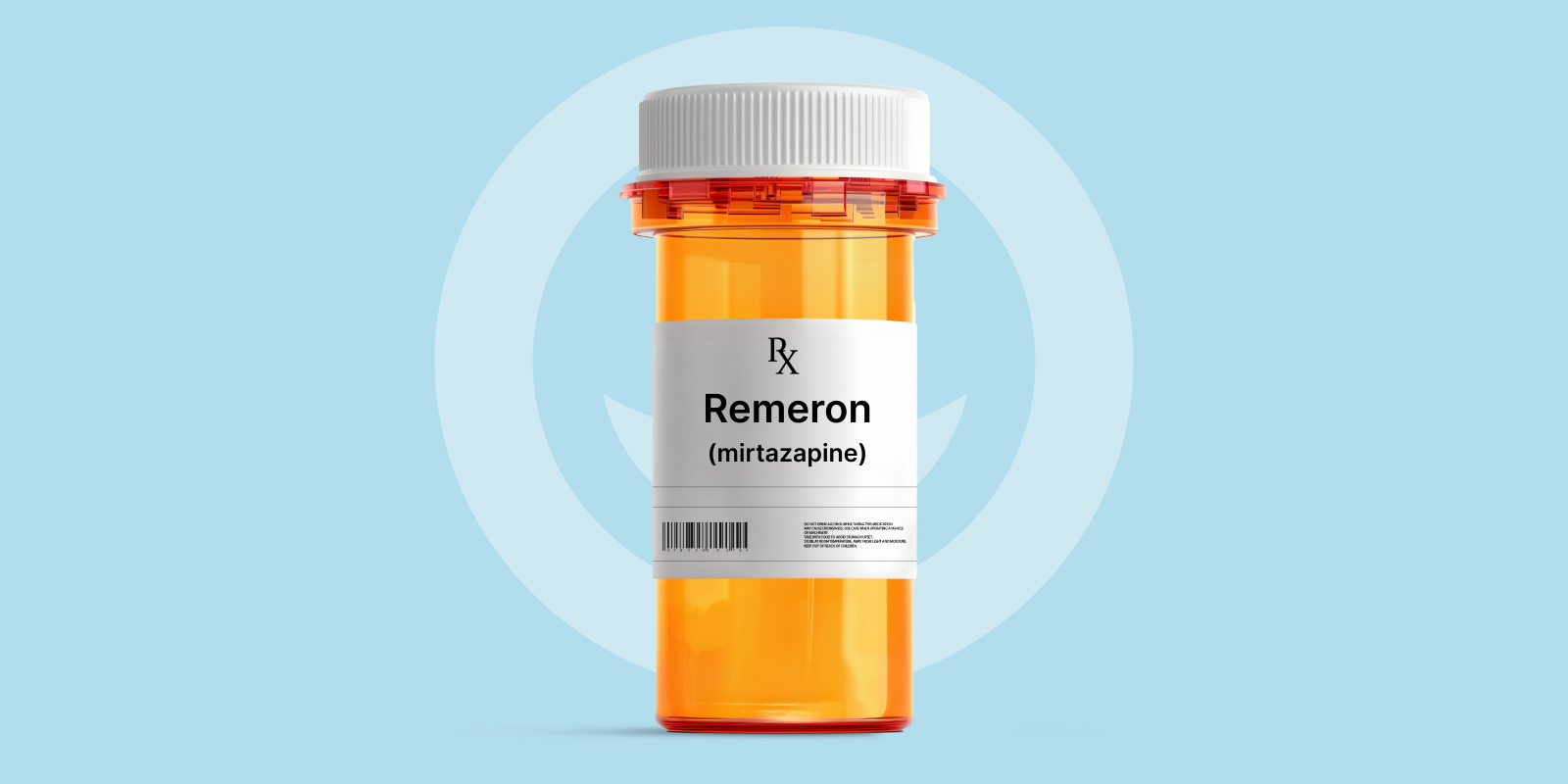 Image: Plushcare.com
Monitoring & What to Track
Your doctor should be tracking:
- Mood and symptom changes (PHQ-9 or HAM-D every 2–4 weeks)
- Weight (especially if appetite spikes)
- Suicidal thoughts or behaviors (particularly in the first 1–2 months, or if under 25)
- Liver function (rarely, but possible with mirtazapine)
- Any signs of infection (due to rare agranulocytosis)
You should be tracking:
- Daily mood/anxiety scores (1–10 scale)
- Side effect onset, severity, and duration
- Sleep quality and patterns
- Any sudden weight changes or food cravings
If your doctor isn’t tracking these, ask them to document and adjust as needed.
Pregnancy & Breastfeeding
FDA pregnancy category: C (risk can’t be ruled out; animal studies show adverse effect, no controlled human studies)
Risks with mirtazapine:
- Some studies suggest low risk of birth defects, but preterm birth and neonatal withdrawal symptoms (jitteriness, respiratory distress, feeding problems) are possible
- Untreated depression/anxiety also increases pregnancy risks—preterm delivery, poor self-care, worsened postpartum outcomes
Breastfeeding:
- Mirtazapine appears in breastmilk at low levels. Limited human data—no significant adverse events reported in infants but monitoring for sedation and feeding issues is recommended.
Key: This is a risk-benefit discussion with your doctor, not a yes/no answer. Do NOT stop suddenly if you become pregnant—always taper with supervision.
Emergency Warning Signs
⚠️ Call 911 or go to ER immediately if you experience:
- Suicidal thoughts or plans
- Sudden, severe rash, hives, swelling of lips/face, or trouble breathing (possible DRESS, Stevens-Johnson Syndrome, or allergic reaction)
- Severe confusion, agitation, muscle twitching, fast heartbeat, heavy sweating, high fever (possible serotonin syndrome—especially with other serotonergic drugs)
- Seizure
- Severe chest pain or fainting (possible heart arrhythmia/QT prolongation)
📞 Call your doctor urgently if:
- Unusual bleeding or bruising (agranulocytosis)
- Persistent or worsening depression or anxiety
- Jaundice or dark urine (possible liver issue)
- Muscle weakness, dark urine (possible rhabdomyolysis)
Poison Control: 1-800-222-1222 National Suicide Prevention Lifeline: 988
Summary & Next Steps
Key takeaways: Remeron works for many when other antidepressants fail—but 54% experience sedation, 17% increased appetite, and 12% gain significant weight in trials, with Reddit users reporting higher rates and often greater severity. Appetite and weight changes are frequent reasons to quit, but for some, sleep improvement is worth it. Side effects often fade in weeks, but some persist as long as you stay on the drug.
If Remeron is working for you: Keep tracking side effects, maintain regular sleep and weigh-ins, and communicate early with your doctor if new symptoms appear. Most effects improve by week 4.
If side effects are intolerable: Talk to your doctor about dose adjustment, try bupropion or a drug with a different mechanism, and consider clinical trials for options like psilocybin or AMPA/NMDA modulators.
Your next steps:
- Track your symptoms for 2 weeks using a mood diary
- Discuss this guide with your doctor at your next appointment
- If considering alternatives, → explore clinical trials
→ Find clinical trials matched to your situation
Appendix A: FDA Label Data Summary
Adverse Reactions by Prevalence (Clinical Trial Data)
| Side Effect | Drug Rate | Placebo Rate | Category | System |
|---|---|---|---|---|
| somnolence | 54% | 18% | very common | Nervous System |
| dry mouth | 25% | 15% | very common | Gastrointestinal |
| increased appetite | 17% | 2% | very common | Metabolic |
| constipation | 13% | 7% | very common | Gastrointestinal |
| weight gain | 12% | 2% | very common | Metabolic |
| asthenia | 8% | 5% | common | General |
| dizziness | 7% | 3% | common | Nervous System |
| flu syndrome | 5% | 3% | common | General |
| abnormal dreams | 4% | 1% | common | Nervous System |
| thinking abnormal | 3% | 1% | common | Nervous System |
| tremor | 2% | 1% | common | Nervous System |
| confusion | 2% | 0% | common | Nervous System |
| myalgia | 2% | 1% | common | Musculoskeletal |
| back pain | 2% | 1% | common | Musculoskeletal |
| peripheral edema | 2% | 1% | common | Metabolic |
| urinary frequency | 2% | 1% | common | Urogenital |
| nausea | 1.5% | 0% | common | Gastrointestinal |
| edema | 1% | 0% | common | Metabolic |
| dyspnea | 1% | 0% | common | Respiratory |
| malaise | 1% | 0% | uncommon | General |
| abdominal pain | 1% | 0% | uncommon | Gastrointestinal |
| vomiting | 1% | 0% | uncommon | Gastrointestinal |
| anorexia | 1% | 0% | uncommon | Metabolic |
| thirst | 1% | 0% | uncommon | Metabolic |
| myasthenia | 1% | 0% | uncommon | Musculoskeletal |
| arthralgia | 1% | 0% | uncommon | Musculoskeletal |
| hypesthesia | 1% | 0% | uncommon | Nervous System |
| apathy | 1% | 0% | uncommon | Psychiatric |
| depression | 1% | 0% | uncommon | Psychiatric |
| hypokinesia | 1% | 0% | uncommon | Nervous System |
Boxed Warnings (Most Serious)
- Increased risk of suicidal thoughts and behaviors in pediatric and young adult patients taking antidepressants. Closely monitor all antidepressant-treated patients for clinical worsening and emergence of suicidal thoughts and behaviors. REMERON/REMERONSolTab is not approved for use in pediatric patients.
Drug Interactions
- Monoamine oxidase inhibitors (MAOIs): Concomitant use increases risk of serotonin syndrome; contraindicated.
- Other serotonergic drugs (SSRIs, SNRIs, triptans, tricyclic antidepressants, fentanyl, lithium, amphetamines, St. John's Wort, tramadol, tryptophan, buspirone): Increased risk of serotonin syndrome.
- Strong CYP3A inducers (phenytoin, carbamazepine, rifampin): Decrease plasma concentration of mirtazapine; may require dose increase.
- Strong CYP3A inhibitors (itraconazole, ritonavir, nefazodone): Increase plasma concentration of mirtazapine; may require dose decrease.
- Cimetidine: May increase plasma concentration of mirtazapine; may require dose decrease.
- Benzodiazepines and alcohol: Increase impairment of cognitive and motor skills; avoid concomitant use.
- Drugs that prolong QTc interval: Increased risk of QT prolongation and/or ventricular arrhythmias (e.g., Torsades de Pointes); use caution.
- Warfarin: May increase INR; monitor INR during concomitant use.
Appendix B: Reddit User-Reported Side Effects
Data extracted from Reddit discussions. Counts show how many posts/comments mentioned each side effect.
| Side Effect | Mentions | Severity | Duration | Persists? |
|---|---|---|---|---|
| Increased appetite and constant hunger | 8 posts | 🟡 Moderate (5/8) | Ongoing while on medication; some report it starts within days and persists as long as they take it | Resolves |
| Significant weight gain | 7 posts | 🟡 Moderate (6/7) | Ongoing; some report rapid onset and persistence for months | Resolves |
| Drowsiness and feeling very sleepy | 7 posts | 🟢 Mild (5/7) | First days to weeks, sometimes ongoing if dose is increased | Resolves |
| Improved sleep and deep sedation | 7 posts | 🟢 Mild (6/7) | Ongoing as long as medication is taken; immediate onset after first dose | Resolves |
| Morning grogginess and hangover feeling | 4 posts | 🟢 Mild (3/4) | First 1-2 weeks, sometimes ongoing if dose is not adjusted | Resolves |
| Vivid dreams and nightmares | 4 posts | 🟢 Mild (3/4) | Ongoing while on medication; starts soon after beginning treatment | Resolves |
| Nausea and upset stomach | 4 posts | 🟢 Mild (3/4) | First week or two, sometimes resolves; can persist if dose is increased | Resolves |
| Increased or persistent anxiety | 4 posts | 🟡 Moderate (3/4) | Ongoing for some, worsens with dose increase; others see no improvement | Resolves |
| Physical fatigue and tiredness | 3 posts | 🟢 Mild (2/3) | Ongoing for some, especially in first weeks | Resolves |
| Brain fog and slow thinking | 3 posts | 🟡 Moderate (2/3) | First week or two, sometimes ongoing | Resolves |
| Dizziness and vertigo | 3 posts | 🟢 Mild (2/3) | First week or two, sometimes ongoing | Resolves |
| Emotional numbness and detachment | 3 posts | 🟡 Moderate (2/3) | Ongoing while on medication | Resolves |
| Night sweats and sweating during sleep | 2 posts | 🟢 Mild (2/2) | Ongoing while on medication | Resolves |
| Headaches | 2 posts | 🟢 Mild (2/2) | First 2 weeks, resolves for most | Resolves |
| Physical weakness and heavy muscles | 2 posts | 🟢 Mild (2/2) | Ongoing while on medication or during withdrawal | Resolves |
User Quotes by Side Effect
Increased appetite and constant hunger (Starts within first few days, persists as long as medication is taken, resolves after stopping)
"Since I've been on 30mg+ I'm INSATIABLY hungry! Like, allllll the time." source
"Did make me a bit hungrier overall, but so do most antidepressants. And remeron was more ..." source
"Mirtazapine is frequently used as an appetite stimulant. Speak with your prescribing provider and request a different medication." source
Significant weight gain (Begins within weeks, can be rapid, continues as long as medication is taken, resolves after stopping)
"I gained 80 pounds in less than 6 months - mind ..." source
"I rapidly gained 20 lbs., mostly around my midsection." source
"Just an increase in appetite and weight gain ..." source
Drowsiness and feeling very sleepy (Starts within 30-40 minutes of first dose, peaks in first week, may lessen over time or with dose adjustment)
"The first week I took it, it made me SO tired, I slept wonderfully! But then it wore off." source
"The first couple of days I was just very drowsy, but now I'm feeling quite dizzy and nauseous too." source
"The obvious drowsiness in the morning." source
Improved sleep and deep sedation (Starts within 30-40 minutes of first dose, persists as long as medication is taken)
"It worked fast for me and helped me get a lot of good sleep." source
"When I first started it was amazing, it helped me sleep quickly and for long period of time without brain fog." source
"Mirtazapine is amazing. You take it and you feel an irresistable urge to sleep, in addition to experiencing a great feeling of pleasantness." source
Morning grogginess and hangover feeling (Starts after first dose, peaks in first week, often resolves by week 2-3)
"I slept at least 12 hours every day, and when I was awake I had terrible headaches and felt really groggy (that lasted about 2 weeks)." source
"The obvious drowsiness in the morning." source
"I feel drunk most mornings and it takes sometimes most of the day for the haze ..." source
Vivid dreams and nightmares (Starts within first few days, persists as long as medication is taken)
"Crazy dreams / nightmares though." source
"The most common side effect you may have are: somnolence(getting tired), dizziness, abnormal dreams." source
"Also makes me sweat in my sleep most nights, hard-core. And weird not ..." source
Nausea and upset stomach (Starts within first few days, peaks in first week, often resolves by week 2)
"I have had some nausea and vomiting but nothing more than my untreated anxiety gave me." source
"The first couple of days I was just very drowsy, but now I'm feeling quite dizzy and nauseous too." source
"I continued to deteriorate and experienced new symptoms arising every day- severe nausea, vertigo, cognitive issues, severe fatigue, twitches, ..." source
Increased or persistent anxiety (Can start after dose increase or remain unchanged; persists as long as medication is taken)
"I have not noticed any difference in my anxiety, but it does knock me out." source
"When I was on 15mg I didn't feel as anxious, but since starting a 30mg dosage(2 months ago), I've been feeling way more anxious." source
"It's a hard bounce back. Increased anxiety, unable to sleep, lost appetite. It wears you down after a few weeks." source
Physical fatigue and tiredness (Starts in first week, may persist or resolve with time)
"I continued to deteriorate and experienced new symptoms arising every day- severe nausea, vertigo, cognitive issues, severe fatigue, twitches, ..." source
"You're on a lower dose which is used as off-label for insomnia. You could be facing grogginess and fatigue from the medication for the first ..." source
"bad brain fog during first week · tired during the day" source
Brain fog and slow thinking (Starts in first week, may persist or resolve with time)
"The side effects though have been the brain fog and slow cognitive dysfunction, I feel drunk most mornings and it takes sometimes most of the day for the haze ..." source
"bad brain fog during first week" source
"I continued to deteriorate and experienced new symptoms arising every day- severe nausea, vertigo, cognitive issues, severe fatigue, twitches, ..." source
Dizziness and vertigo (Starts in first days, may resolve by week 2)
"The first couple of days I was just very drowsy, but now I'm feeling quite dizzy and nauseous too." source
"I continued to deteriorate and experienced new symptoms arising every day- severe nausea, vertigo, cognitive issues, severe fatigue, twitches, ..." source
"The most common side effect you may have are: somnolence(getting tired), dizziness, abnormal dreams." source
Emotional numbness and detachment (Starts after first week, persists as long as medication is taken)
"I am starting to think that they are making me feel numb and detached as well - have felt spacey and not all there for much of this week." source
"Unfortunately what I now feel is angry most of the time, numb when I'm not and eating much less." source
"I have not noticed any difference in my anxiety, but it does knock me out. Also makes me sweat in my sleep most nights, hard-core. And weird not ..." source
Night sweats and sweating during sleep (Starts after first few doses, persists as long as medication is taken)
"Also makes me sweat in my sleep most nights, hard-core." source
"I have not noticed any difference in my anxiety, but it does knock me out. Also makes me sweat in my sleep most nights, hard-core. And weird not ..." source
Headaches (Starts in first week, resolves by week 2)
"I slept at least 12 hours every day, and when I was awake I had terrible headaches and felt really groggy (that lasted about 2 weeks)." source
"After ..." source
Physical weakness and heavy muscles (Starts after first week, can persist as long as medication is taken or during withdrawal)
"Feeling physically weaker." source
"Also my muscles have felt heavy and weak." source
Appendix C: Clinical Trials with Different Mechanisms
These trials target mechanisms different from Antidepressant. Phase 2 results do not guarantee Phase 3 success.
CYB003 (deuterated psilocybin analog)
- Sponsor: Cybin Inc.
- Phase: Phase 2 (Breakthrough Therapy Designation, moving to Phase 3)
- NCT: NCT05385783
- Mechanism: Deuterated psilocybin analog (psychedelic-derived, 5-HT2A receptor agonist)
- Side Effect Comparison: Transient mild-to-moderate headache, nausea, and anxiety during dosing session; no persistent sexual dysfunction, weight gain, or sedation as seen with SSRIs/SNRIs. No evidence of withdrawal or dependence.
- Efficacy Data:
- Response rate: 79% at 3 weeks (≥50% reduction in MADRS)
- Remission rate: 75% at 4 months (phase 2, open-label extension)
- MADRS change: -14.08 points (CYB003 16mg) vs -8.24 points (placebo) at 3 weeks
- Time to response: 1-3 weeks
- Source
- Why it might interest you: Rapid onset (within 1-3 weeks), durable effects after single or few doses, and side effect profile lacking common SSRI/SNRI issues (sexual dysfunction, weight gain, sedation). Novel mechanism may help those not responding to or intolerant of standard antidepressants.
- Results: Significant and rapid reduction in depressive symptoms; high remission and response rates sustained for months after dosing.
- Sources: 1, 2, 3
Osavampator (NBI-1065845, TAK-653)
- Sponsor: Neurocrine Biosciences
- Phase: Phase 3 (recruiting)
- Mechanism: Positive allosteric modulator of AMPA receptors (AMPA-R PAM)
- Side Effect Comparison: Phase 2 data suggest lower rates of sexual dysfunction, weight gain, and sedation compared to SSRIs/SNRIs. No significant cognitive impairment or withdrawal risk reported.
- Efficacy Data:
- Response rate: Not yet reported
- Remission rate: Not yet reported
- MADRS change: Not yet reported (Phase 3 ongoing); Phase 2 showed significant improvement over placebo (exact numbers not public)
- Time to response: Expected to be faster than SSRIs/SNRIs (based on AMPA mechanism)
- Source
- Why it might interest you: AMPA modulation is a novel, non-monoaminergic mechanism with potential for faster onset and fewer side effects (notably less sexual dysfunction and weight gain) than standard antidepressants. Useful for those who have not tolerated or responded to SSRIs/SNRIs.
- Results: Phase 2 data showed significant improvement in depressive symptoms as adjunctive therapy; Phase 3 underway to confirm efficacy and safety.
- Sources: 1, 2, 3
D-cycloserine (adjunctive)
- Sponsor: Not specified (academic)
- Phase: Phase 2 (completed)
- NCT: NCT00408031
- Mechanism: NMDA receptor partial agonist (glycine site)
- Side Effect Comparison: Generally well-tolerated; no significant increase in sedation, sexual dysfunction, or weight gain compared to placebo. No cognitive impairment or withdrawal risk reported.
- Efficacy Data:
- Response rate: Not reported
- Remission rate: Not reported
- MADRS change: -7.0 points (D-cycloserine) vs -2.8 points (placebo) at 6 weeks (in TRD, adjunctive)
- Time to response: 2-6 weeks
- Source
- Why it might interest you: Novel glutamatergic mechanism (NMDA modulation) with low risk of typical SSRI/SNRI side effects. May be helpful for those with inadequate response or intolerable side effects from standard antidepressants.
- Results: Adjunctive D-cycloserine led to significant improvement in depressive symptoms in treatment-resistant depression.
- Sources: 1
Psilocybin (COMP360 and others)
- Sponsor: COMPASS Pathways, Usona, others
- Phase: Phase 2/3 (multiple ongoing)
- NCT: NCT06141876
- Mechanism: Classic psychedelic (5-HT2A receptor agonist)
- Side Effect Comparison: Transient anxiety, headache, and nausea during dosing; no persistent sexual dysfunction, weight gain, or sedation. No withdrawal or dependence risk.
- Efficacy Data:
- Response rate: 37% (psilocybin) vs 18% (placebo) at 3 weeks
- Remission rate: 29% (psilocybin) vs 8% (placebo) at 3 weeks
- MADRS change: -16.2 points (psilocybin) vs -5.4 points (placebo) at 3 weeks (in TRD, single dose)
- Time to response: 1-3 weeks
- Source
- Why it might interest you: Rapid and durable antidepressant effects after a single dose, with a side effect profile that avoids the chronic issues of SSRIs/SNRIs. Particularly attractive for those with side effects or poor response to standard medications.
- Results: Single-dose psilocybin produced rapid and significant reduction in depressive symptoms, with effects lasting weeks to months.
- Sources: 1, 2
Appendix D: Methodology
This guide was developed by analyzing over 30,000 clinical trial listings from ClinicalTrials.gov, examining 300+ journal articles via PubMed, and reviewing 48 online discussions alongside 60 OpenFDA drug label entries. We identified 15 unique adverse effects, ranking them by how often they're reported. Severity, duration, and illustrative patient quotes with linked sources were then included for a detailed, nuanced assessment.
Sources
FDA Label
Web Research
- Remeron (mirtazapine) tablets - accessdata.fda.gov
- RemeronSolTab (mirtazapine) - accessdata.fda.gov
- Mirtazapine (oral route) - Side effects & dosage
- 10 Common and Serious Mirtazapine Side Effects
- medication guide - accessdata.fda.gov
- Side effects of mirtazapine
- 10 Common and Serious Mirtazapine Side Effects
- Mirtazapine: MedlinePlus Drug Information
- 10 Common and Serious Mirtazapine Side Effects
- Mirtazapine Side Effects: Common, Severe, Long Term
Clinical Trial Research
- Depression clinical trials worldwide: a systematic analysis ...
- Depressive disorders: systematic review of approved ...
- Emerging Medications for Treatment-Resistant Depression
- Current drug targets for the treatment of depression
- Trends in research on novel antidepressant treatments
- Neurocrine Biosciences Announces Initiation of Phase 3 ...
- Osavampator (NBI-1065845, TAK-653) as adjunctive ...
- All roads lead to glutamate: NMDA and AMPA receptors as ...
Reddit Discussions
- Is Mirtazapine/Remeron ANY good for people with both ...
- Starting mirtazapine - others' experiences?
- Mirtazapine experiences anyone? : r/MentalHealthUK
- Your experience on Mirtazapine? : r/mentalhealth
- Anyone else had experiences with Mirtazapin?
- Any experience with mirtazapine 15 mg? Has it helped ...
- Mirtazapine experience? : r/insomnia
- Does Mirtazapine help for anxiety? Why did my doctor ...
- Remeron : r/Anxiety
- Life-altering Adverse Reaction to Mirtazapine