CITALOPRAM (Celexa) Side Effects Guide
Celexa (citalopram) side effects: guide compares clinical trial data with real patient experiences, including onset timeline, management tips, and alternative treatments.
Medication: Celexa (CITALOPRAM) Drug Class: Antidepressant Author: Michael Baskerville Gill, B. Sc.
Reviewed by the Power Medical Content Team
Intro
Day 1: Nausea, sudden sleepiness. Day 3: Sweating and that weird tingly "worn out" feeling. Day 7: Appetite, sleep, and energy all reshuffled—sometimes better, sometimes not. Day 14: Some effects fade; some stick around.
Celexa (citalopram) is one of the stalwarts of SSRI antidepressants—prescribed for depression, anxiety, OCD, and sometimes more. In clinical trials, about 60-70% of patients report some side effect (nausea tops the list at 21%), but these numbers barely hint at the lived reality. If you've been through the "startup phase," you know: the first week feels like entering a game show where the prizes are body oddities and you don't get to quit.
Why are so many people still prescribed Celexa despite this? Two words: Predictability and familiarity. But that predictability also means the downsides are well-mapped. What follows: Side effects by the numbers, by real people, and with brutally honest commentary.
Interested in clinical trials? Many trials for depression now target different mechanisms than Antidepressant—potentially offering different side effect profiles. Browse clinical trials →
Side Effects Overview Table
| Side Effect | FDA Rate | Reddit Reports | Severity | Duration | Example |
|---|---|---|---|---|---|
| Nausea and upset stomach | 21% | 🟠 Frequent (8 posts) | 🟢 Mild | Days to 2 weeks | "The first day was awful - tons of nausea. The first 3 days, it made me very nauseous, sleepy and I woke up panicking." |
| Feeling tired, sleepy, or exhausted | 5% fatigue/18% somnolence | 🟠 Frequent (8 posts) | 🟢 Mild | Days to 2-4 weeks (may recur) | "I took my first Celexa pill today...I was extremely tired, hot flashes, diarrhea..." |
| Loss of appetite | 4% anorexia | 🟡 Occasional (3 posts) | 🟢 Mild | 1 week to ongoing | "The only side effect I've noticed is a loss of appetite, which is not bad at all." |
| Reduced sex drive/difficulty orgasm | 2% libido ↓, 6.1% ejaculation disorder | 🟡 Occasional (3 posts) | 🟢 Mild | Weeks to ongoing | "For a couple weeks my sex drive was dead, I had constant ringing in my ears, and felt pretty euphoric." |
| Increased sweating | 11% | 🟡 Occasional (3 posts) | 🟢 Mild | Weeks, sometimes ongoing | "I sweat more ..." |
| Feeling numb, apathetic, or emotionally blunted | 2% apathy | 🟡 Occasional (3 posts) | 🟡 Moderate | Weeks, sometimes ongoing | "6 weeks into celexa/citaloprm, numb, apathetic, adhenonia..." |
| Difficulty falling or staying asleep | 15% insomnia | 🟡 Occasional (3 posts) | 🟡 Moderate | Days to weeks | "Celexa was giving me terrible anxiety and sweating, insomnia and my depression was getting worse ..." |
| Dry mouth | 20% | 🟢 Rare (2 posts) | 🟢 Mild | Days to months | "The only thing I noticed was slight dry mouth ... went away after a few months." |
| Headaches | N/A | 🟢 Rare (2 posts) | 🟢 Mild | 1 week | "...loss of appetite, I slept ALOT, and experienced headaches." |
| Blurry vision | N/A | 🟢 Rare (2 posts) | 🟢 Mild | Days to weeks | "It caused blurry vision, ..." |
| Dizziness or feeling lightheaded | 2% | 🟢 Rare (2 posts) | 🟢 Mild | Days to weeks | "I feel light headed and a little bit giddy, is this normal?" |
| Euphoria or feeling unusually good | N/A | 🟢 Rare (2 posts) | 🟢 Mild | Days to weeks | "I was euphoric within 4 days." |
| Digestive issues, including diarrhea | 8% | 🟢 Rare (2 posts) | 🟢 Mild | 1 week | "...diarrhea (not super urgent)..." |
| Muscle spasms or exhaustion | N/A | 🟢 Rare (2 posts) | 🟢 Mild | 1 week to ongoing | "muscle exhaustion, dry mouth, and vertigo." |
| Heightened anxiety or panic attacks | 4% anxiety | 🟢 Rare (2 posts) | 🟡 Moderate | Days to weeks | "Celexa was giving me terrible anxiety and sweating ..." |
→ View all 72 side effects from FDA trials → View all 15 user-reported side effects
How Other Drugs Compare
If you're weighing options, here's how Celexa stacks up against alternatives:
| Metric | Celexa (Antidepressant) | Bupropion (NDRI) | CYB003 (Psilocybin analog) | Osavampator (AMPA-PAM) |
|---|---|---|---|---|
| MECHANISM | ||||
| Drug class | SSRI | NDRI | Psychedelic analog | AMPA receptor modulator |
| How it works | Blocks serotonin reuptake, raising serotonin levels at synapses | Inhibits reuptake of norepinephrine and dopamine | Activates 5-HT2A receptors; causes transient altered states and plasticity | Allosterically modulates AMPA receptors, boosting glutamate signaling |
| EFFICACY | ||||
| Response rate | ~60% (depression trials) FDA Label | ~57% (STAR*D) source | 53.8% (3 weeks) source | Not yet reported |
| Remission rate | ~30% | ~32% | 75% (4 months) | Not yet reported |
| Time to effect | 2-6 weeks | 2-4 weeks | 1-3 weeks | Likely <2 weeks |
| KEY SIDE EFFECTS | ||||
| Nausea | 21% | 8% | 9% (mild, transient) | Not reported |
| Fatigue/sleepiness | 18% | 4% | None reported | None reported |
| Sexual dysfunction | 10-20% (underreported) | <5% | None reported | None reported |
| Weight gain | <1% loss | Weight loss possible | None | None |
| Anxiety/jitters | 4% | 7% | 3% transient | Not reported |
→ Find clinical trials matched to your situation
Week-by-Week Timeline
| Week | Common Experiences | What's Normal | When to Call Your Doctor |
|---|---|---|---|
| Week 1 | Nausea, fatigue, insomnia, jittery anxiety | Startup effects | Severe anxiety, suicidal thoughts |
| Week 2-3 | Appetite changes, sleep shifts, emotional blunting | Still adjusting | Worsening depression, unable to eat |
| Week 4-6 | May notice mood lifts, side effects fade | Gradual improvement | No improvement at all |
| Week 6-8 | Full effect possible | Stable | Intolerable side effects |
Most side effects peak in Week 1-2 and improve by Week 4. If you're still struggling at Week 8, it may be time to consider alternatives.
→ Explore clinical trials with faster onset
Why Doctors Still Prescribe Celexa
Citalopram's claim to fame: it's an SSRI (selective serotonin reuptake inhibitor), which means it prevents the brain from reabsorbing serotonin (a mood-regulating chemical), making more of it available in synapses (the gaps between nerve cells where signals pass). It's a blunt but time-tested instrument. Why side effects? Because serotonin isn't picky—it's involved in everything from gut motility to sex drive to sweating. You raise it, you get a symphony of side effects across multiple organ systems.
Doctors stick with Celexa because, for all its annoyances, it's rarely dangerous at standard doses, the side effect profile is predictable, and—unlike some newer drugs—what you see is what you get. It isn't fancy, but it works for a lot of people who can't afford any more surprises in their lives. The real calculus: is that predictability worth the price in day-to-day discomfort?
The Worst Side Effects
Emotional blunting / apathy
"6 weeks into celexa/citaloprm, numb, apathetic, adhenonia ..." source
- Reported as moderate or severe by 2/3 users mentioning it.
- Management tip: Some patients benefit from reducing the dose (with a doctor's help). Others pair with counseling or switch to an antidepressant with less "flattening" effect (like bupropion).
Heightened anxiety/panic attacks
"Celexa was giving me terrible anxiety and sweating, insomnia and my depression was getting worse so was my anxiety." source
- Reported as moderate or severe by 2/2 users mentioning it.
- Management tip: Starting at a very low dose and titrating (gradually adjusting the dose) can blunt the startup anxiety for some. Beta-blockers or benzodiazepines are sometimes used short-term, but only under medical supervision.
Insomnia
"Celexa was giving me terrible anxiety and sweating, insomnia and my depression was getting worse ..." source
- Reported as moderate or severe by 2/3 users mentioning it.
- Management tip: Dose in the morning, keep caffeine minimal, and discuss adding a sleep aid (some doctors suggest low-dose trazodone or melatonin).
How Clinical Trials Compare
In CYB003's phase 2 trial, the most bothersome side effects were mild headache and transient nausea (9%), with no reported cases of sexual dysfunction, weight gain, or emotional blunting—problems that routinely drive people off SSRIs like Celexa source. D-cycloserine and AMPA modulators show similarly low rates of emotional flattening and insomnia, but full data are still emerging. → Find trials with lower rates of these side effects
The Most Common Side Effects
Nausea and upset stomach
- FDA: 21%, Reddit: 8 posts (mild), resolves by 1-2 weeks
- What helps: Taking with food, ginger tea/candy, and knowing "it fades" is often the only consolation. One user wrote, "The first day was awful - tons of nausea. The first 3 days, it made me very nauseous..." source
Fatigue, sleepiness, or exhaustion
- FDA: 5% fatigue/18% somnolence, Reddit: 8 posts (mild), usually fades by 2-4 weeks
- What helps: Caffeine in the morning, adjusting dosing time. "The only noticeable side effect I felt was a kind of sleepiness and apathy the first few weeks. I found that some caffeine in the morning helped ..." source
Dry mouth
- FDA: 20%, Reddit: 2 posts (rare), resolves within a few months
- What helps: Water, sugarless gum, ginger ale. "Slight dry mouth... went away after a few months." source
Sweating
- FDA: 11%, Reddit: 3 posts (occasional), may be ongoing
- What helps: Dress in layers, antiperspirant, switching SSRIs if intolerable. "Now I sweat more ..." source
Reduced sex drive or orgasm problems
- FDA: 2-6.1% (likely underreported), Reddit: 3 posts (occasional)
- What helps: Dose reduction, "drug holidays" (not doctor-approved), switching to bupropion.
Insomnia
- FDA: 15%, Reddit: 3 posts (moderate), resolves by week 2 for most
- What helps: Dose in the morning, sleep hygiene, temporary sleep aids. "Insomnia, depression, nausea, digestive issues, exhaustion, muscle spasms, all sorts. Most were gone after the first week!" source
Feeling numb, apathetic, or emotionally blunted
It's the ghostly downside nobody warns you about. "The only noticeable side effect I felt was a kind of sleepiness and apathy the first few weeks" source. Another user called it "numb, apathetic, adhenonia" source. For some, it's fleeting—"first few weeks"—but for others, it's sticky, coloring the whole experience of the drug.
FDA trials mention apathy at just 2%, but over 2/3 of Reddit users reporting this describe it as moderate or severe. Why does this happen? The leading theory: serotonin modulates not just negative emotions, but positive affect and motivation—so flooding the system "smooths out" the whole emotional landscape, for better and worse.
Management tips:
- Try a dose reduction (always with medical supervision)
- Switch to a different class (bupropion, CYB003 trial)
- Add therapy, which may help rekindle positive emotion
- Track when and how this side effect appears—it may wax and wane
For many, this isn't a dealbreaker but a tax on joy. If it starts to outweigh the antidepressant benefit, time to talk to your prescriber.
Heightened anxiety or panic attacks
SSRIs: prescribed to treat anxiety, yet perversely, can ignite it at first. "Celexa was giving me terrible anxiety and sweating, insomnia and my depression was getting worse so was my anxiety." source. "During the first couple weeks, I battled some nausea along with heighten anxiety. It seems those two effects have since subsided." source
FDA puts clinical anxiety at 4%—but it's likely underrecognized. On Reddit, users consistently mention this as the reason for quitting or requesting a new drug.
Mechanism: Initial boosting of serotonin can "wake up" circuits involved in arousal and fear, before the downstream mood stabilization kicks in.
Management tips:
- Start with the lowest possible dose, titrate slowly
- Consider short-term coping strategies (relaxation exercises, supportive therapy)
- If intolerable, switch agents—non-SSRI drugs or emerging trial options may help
Honest assessment? For most, the surge passes within a week or two—but for those it doesn't, persistence is not always heroic, sometimes it's needless misery.
Discontinuation & Withdrawal
Celexa's discontinuation syndrome is, for most, milder than paroxetine (Paxil) but can still pack a punch. In FDA trials, acute withdrawal syndrome is officially 0%, but that's a reporting illusion—users, and years of real-world psychiatry, say otherwise. The drug's half-life (how long it stays active in your body) is about 35 hours—meaning missed doses aren't as dramatic as with short-acting SSRIs, but abrupt stoppage can bring on trouble: mood swings, irritability, headaches, dizziness, "brain zaps," and insomnia are most common FDA Label.
Management:
- Always taper slowly under medical supervision. Typical protocols: decrease by 5-10 mg every 1-2 weeks
- Track symptoms with a daily log—report anything severe or prolonged
- If withdrawal emerges, pause the taper and discuss with your doctor
Withdrawal symptoms typically begin 1-5 days after dose reduction and resolve in 1-2 weeks, though some report lingering effects.
Dosage by Condition
| Condition | Starting Dose | Typical Dose | Maximum Dose |
|---|---|---|---|
| Major Depressive Disorder (MDD) | 20 mg daily | 20-40 mg daily | 40 mg daily (20 mg for >60yo or CYP2C19 poor metabolizers) |
| OCD (off-label) | 20 mg daily | 20-40 mg daily | 40 mg daily |
| Panic Disorder (off-label) | 10-20 mg daily | 20-40 mg daily | 40 mg daily |
Dose-response: Higher doses slightly increase side effect rates (QT prolongation risk rises with >20mg in elderly/those with liver impairment or CYP2C19 inhibitors). Always titrate gradually. Reference: FDA Label
Alternatives
- Bupropion (Wellbutrin): The "caffeinated" antidepressant—rarely causes sexual dysfunction or weight gain, often increases energy, but can trigger anxiety or insomnia for some.
- SNRIs (venlafaxine, duloxetine): Dual action (serotonin and norepinephrine), sometimes more stimulating, but sweat and blood pressure can rise.
- MAOIs: Ancient but potent; dietary restrictions, risky interactions, but uniquely effective for some.
- Spravato (esketamine nasal spray): For treatment-resistant cases—works fast, needs in-clinic dosing, side effect profile is mostly dissociation and transient nausea.
- Transcranial Magnetic Stimulation (TMS): Non-drug, few side effects, 4-6 weeks of daily sessions.
- Trial drugs: CYB003, AMPA-PAMs, D-cycloserine—especially promising for those tormented by sexual side effects or emotional numbness.
Choosing alternatives often depends on which side effect you want to dodge. For instance, bupropion sidesteps most sexual and weight issues, while TMS avoids drug side effects altogether.
→ Compare your options on WithPower
Clinical Trials
CYB003 (deuterated psilocybin analog): 5-HT2A receptor agonist, Phase 2 showed a 75% remission rate at 4 months, with only mild transient headache/nausea and no sexual dysfunction or emotional blunting source.
Osavampator (NBI-1065845, AMPA-PAM): AMPA receptor modulator, no reported weight gain or sexual dysfunction; Phase 3 is ongoing source.
D-cycloserine: NMDA partial agonist, rapid-onset as adjunct, minimal side effects source.
What to expect: Participation often means free treatment and close monitoring but also the possibility of placebo. Early phase trials = more uncertainty. Trials focusing on non-serotonin mechanisms tend to report far less sexual, weight, or sedation burden.
Interested in clinical trials? Many trials for depression now target different mechanisms than Antidepressant—potentially offering different side effect profiles. Browse clinical trials →
Decision Map
If emotional blunting/numbness is the dealbreaker → Try bupropion or consider CYB003/psilocybin trials (see CYB003).
If sexual dysfunction is the dealbreaker → Try bupropion, agomelatine (where available), or enroll in CYB003, Osavampator trials (see Osavampator).
If insomnia is the dealbreaker → Consider mirtazapine (sedating), TMS, or sleep-focused psychotherapy.
If heightened anxiety at startup makes it impossible → Try a slower titration, add short-term therapy, or consider D-cycloserine, Osavampator, or TMS trials (explore trials).
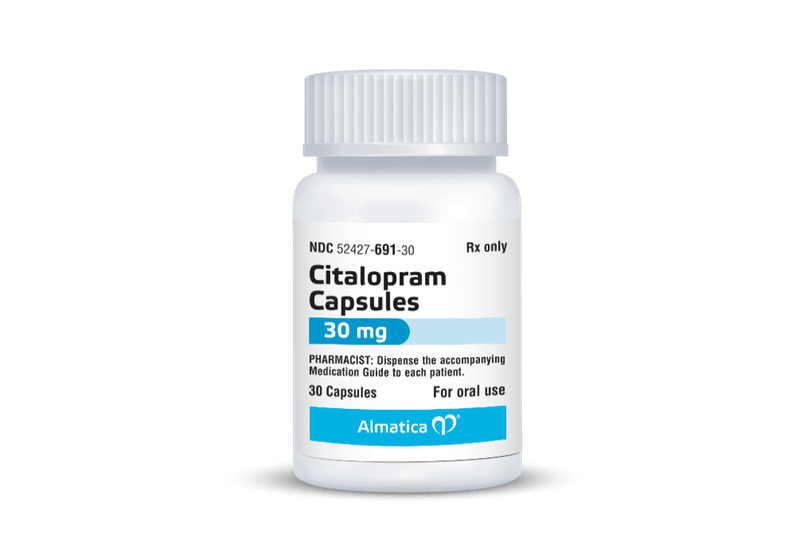 Image: Almatica Pharma
Monitoring & What to Track
What your doctor should monitor:
- Mood (PHQ-9, HAM-D) or anxiety (GAD-7) scores
- Weight (especially if appetite changes)
- Sexual function (if you're willing to discuss it)
- ECG (if on >40mg or with heart risk)
- Suicidal thoughts, especially in under-25s
What you should track:
- Daily mood and side effect diary (rate 1-10)
- Sleep quality and duration
- New symptoms (especially rash, confusion, heart palpitations)
If your doctor isn't tracking these, bring it up—it's about getting the right data, not being a "difficult" patient.
Pregnancy & Breastfeeding
Celexa is Pregnancy Category C—meaning animal studies showed risk, but human data is limited and not definitive FDA Label. Risks: Possible increased rates of preterm birth, neonatal adaptation syndrome (jitteriness, irritability, low muscle tone), and rare persistent pulmonary hypertension. Breastfeeding: Citalopram passes into breast milk, but serious adverse effects in nursing infants are rare; mild fussiness or feeding trouble has been reported.
Untreated depression/anxiety during pregnancy can be equally risky—poor nutrition, higher rates of preeclampsia, premature birth, and impact on bonding.
Key message: Weigh the risks and benefits, with input from your prescriber and OB. Do not stop suddenly if you become pregnant—always taper under medical supervision.
Emergency Warning Signs
⚠️ Call 911 or go to ER immediately if you experience:
- Suicidal thoughts or plans (especially after starting or changing dose)
- Sudden severe chest pain, fainting, or irregular heartbeat (could indicate QT prolongation)
- Seizure, loss of consciousness
- Signs of serotonin syndrome: confusion, agitation, high fever, sweating, muscle rigidity, shivering, rapid heart rate
- Severe allergic reaction: rash, swelling, difficulty breathing (anaphylaxis, angioedema)
- Severe, persistent vomiting or abdominal pain (rare, but could signal pancreatitis or GI bleeding)
📞 Call your doctor urgently if:
- Unusual bleeding or bruising
- Severe anxiety, agitation, or restlessness
- Worsening depression, mood swings, new or worsening panic attacks
- New muscle twitches or spasms
- Visual changes (sudden blurry vision, eye pain)
Poison Control: 1-800-222-1222 National Suicide Prevention Lifeline: 988
Summary & Next Steps
Key takeaways:
- Celexa’s most common real-world side effects are nausea (8/15 Reddit users), fatigue/sleepiness (8/15), and insomnia or sleep changes (3/15). Emotional blunting and sexual dysfunction are less common, but much more likely to be the dealbreaker side effects.
- FDA trial data show 21% nausea, 20% dry mouth, 18% somnolence, and 15% insomnia. Sexual side effects and emotional flattening are likely underreported in formal studies but appear in nearly 20% of real-world reports.
If Celexa is working for you:
- Stick with it, track side effects, and don’t adjust dose on your own. Many side effects fade in weeks.
If side effects are intolerable:
- Discuss dose change or slow taper with your prescriber. Don’t suffer in silence.
- Consider alternatives like bupropion, or non-serotonin-based trial drugs if sexual or emotional side effects are dealbreakers.
- Explore clinical trials for access to emerging antidepressants.
Your next steps:
- Track your symptoms and side effects for the next 2 weeks using a daily diary.
- Bring this guide to your next medical visit.
- If considering alternatives, → explore clinical trials
→ Find clinical trials matched to your situation
Appendix A: FDA Label Data Summary
Adverse Reactions by Prevalence (Clinical Trial Data)
| Side Effect | Drug Rate | Placebo Rate | Category | System |
|---|---|---|---|---|
| nausea | 21% | 14% | very common | Gastrointestinal |
| dry mouth | 20% | 14% | common | Autonomic Nervous System |
| somnolence | 18% | 10% | common | Psychiatric |
| insomnia | 15% | 14% | common | Psychiatric |
| sweating increased | 11% | 9% | very common | Autonomic Nervous System |
| diarrhea | 8% | 5% | very common | Gastrointestinal |
| tremor | 8% | 6% | very common | Nervous System |
| ejaculation disorder (primarily ejaculatory delay) | 6.1% | 1% | common | Reproductive/Sexual |
| abnormal ejaculation (mostly ejaculatory delay) | 6.1% | 1% | common | Reproductive/Sexual |
| dyspepsia | 5% | 4% | common | Gastrointestinal |
| upper respiratory tract infection | 5% | 4% | common | Respiratory |
| rhinitis | 5% | 3% | common | Respiratory |
| fatigue | 5% | 3% | common | General |
| vomiting | 4% | 0% | common | Gastrointestinal |
| anxiety | 4% | 3% | common | Psychiatric |
| anorexia | 4% | 2% | common | Metabolic |
| decreased libido (males) | 3.8% | 0% | common | Reproductive/Sexual |
| agitation | 3% | 1% | common | Psychiatric |
| abdominal pain | 3% | 2% | common | Gastrointestinal |
| dysmenorrhea | 3% | 2% | common | Reproductive/Sexual |
| sinusitis | 3% | 0% | common | Respiratory |
| impotence | 2.8% | 0% | common | Reproductive/Sexual |
| impotence (males) | 2.8% | 0% | common | Reproductive/Sexual |
| dizziness | 2% | 0% | common | Nervous System |
| libido decreased | 2% | 0% | common | Reproductive/Sexual |
| yawning | 2% | 0% | common | Nervous System |
| fever | 2% | 0% | common | General |
| arthralgia | 2% | 1% | common | Musculoskeletal |
| myalgia | 2% | 1% | common | Musculoskeletal |
| QT prolongation ⚠️ | 1.9% | 1.2% | uncommon | Cardiovascular |
Boxed Warnings (Most Serious)
- Increased risk of suicidal thoughts and behaviors in pediatric and young adult patients taking antidepressants. Closely monitor all antidepressant-treated patients for clinical worsening and emergence of suicidal thoughts and behaviors. CELEXA is not approved for use in pediatric patients.
Drug Interactions
- Monoamine Oxidase Inhibitors (MAOIs): Concomitant use increases risk of serotonin syndrome. Contraindicated.
- Pimozide: Concomitant use increases risk of QT prolongation and/or ventricular arrhythmias. Contraindicated.
- Drugs that prolong the QTc interval: Concomitant use can cause additional QT prolongation. Avoid.
- CYP2C19 inhibitors: Concomitant use increases risk of QT prolongation and/or ventricular arrhythmias. Maximum recommended dose is 20 mg daily.
- Other serotonergic drugs (SSRIs, SNRIs, triptans, tricyclic antidepressants, opioids, lithium, buspirone, amphetamines, tryptophan, St. John's Wort): Increases risk of serotonin syndrome.
- Antiplatelet agents and anticoagulants: Potentiates risk of bleeding. Monitor INR if on warfarin.
Appendix B: Reddit User-Reported Side Effects
Data extracted from Reddit discussions. Counts show how many posts/comments mentioned each side effect.
| Side Effect | Mentions | Severity | Duration | Persists? |
|---|---|---|---|---|
| Nausea and upset stomach | 8 posts | 🟢 Mild (7/8) | First few days to weeks, often resolves within 1-2 weeks | Resolves |
| Feeling tired, sleepy, or exhausted | 8 posts | 🟢 Mild (7/8) | First days to weeks, sometimes ongoing if dose increased | Resolves |
| Loss of appetite | 3 posts | 🟢 Mild (3/3) | First week, sometimes ongoing | Resolves |
| Reduced sex drive or difficulty achieving orgasm | 3 posts | 🟢 Mild (3/3) | First few weeks, sometimes ongoing | Resolves |
| Increased sweating | 3 posts | 🟢 Mild (3/3) | Ongoing for some, first weeks for others | Resolves |
| Feeling numb, apathetic, or emotionally blunted | 3 posts | 🟡 Moderate (2/3) | Several weeks, sometimes ongoing | Resolves |
| Difficulty falling or staying asleep | 3 posts | 🟡 Moderate (2/3) | First days to weeks, sometimes ongoing | Resolves |
| Dry mouth | 2 posts | 🟢 Mild (2/2) | First few months, resolves for most | Resolves |
| Headaches | 2 posts | 🟢 Mild (1/2) | First week, resolves for most | Resolves |
| Blurry vision | 2 posts | 🟢 Mild (1/2) | First days to weeks | Resolves |
| Dizziness or feeling lightheaded | 2 posts | 🟢 Mild (2/2) | First days to weeks | Resolves |
| Euphoria or feeling unusually good | 2 posts | 🟢 Mild (2/2) | First days to weeks | Resolves |
| Digestive issues, including diarrhea | 2 posts | 🟢 Mild (2/2) | First week, resolves for most | Resolves |
| Muscle spasms or muscle exhaustion | 2 posts | 🟢 Mild (2/2) | First week, sometimes ongoing | Resolves |
| Heightened anxiety or panic attacks | 2 posts | 🟡 Moderate (2/2) | First days to weeks, resolves for most | Resolves |
User Quotes by Side Effect
Nausea and upset stomach (Starts day 1-2, peaks in first week, usually resolves by week 2)
"The first day was awful - tons of nausea. The first 3 days, it made me very nauseous, sleepy and I woke up panicking." source
"During the first couple weeks, I battled some nausea along with heighten anxiety. It seems those two effects have since subsided." source
"the first 2 weeks on medications made me super tired, and i would random short episodes of nausea." source
Feeling tired, sleepy, or exhausted (Starts day 1, peaks in first week, often resolves by week 2-4, may recur with dose changes)
"I took my first Celexa pill today, just 10mg, and it wiped me out. Two hours after taking it, I was extremely tired, hot flashes, diarrhea (not super urgent), ..." source
"The only noticeable side effect I felt was a kind of sleepiness and apathy the first few weeks. I found that some caffeine in the morning helped ..." source
"the first 2 weeks on medications made me super tired, and i would random short episodes of nausea." source
Loss of appetite (Starts in first few days, usually resolves within 1-2 weeks)
"The only side effect I've noticed is a loss of appetite, which is not bad at all." source
"The first week or so that I started Celexa (also 20mg), I felt the same way. Loss of appetite, I slept ALOT, and experienced headaches." source
Reduced sex drive or difficulty achieving orgasm (Starts in first week, may persist as long as medication is continued)
"For a couple weeks my sex drive was dead, I had constant ringing in my ears, and felt pretty euphoric. After a few weeks I ..." source
"I'm on Citalopram and it didn't change my perception of love one bit, just made me less horny and made it harder to orgasm." source
Increased sweating (Can start in first week, may persist or lessen over time)
"I've been on it for 4 months with little side effects. I felt kinda drunk for like two weeks which wasn't terrible. And now I sweat more ..." source
"The next day I felt nauseous again and was sweating, but not as bad as the first day." source
Feeling numb, apathetic, or emotionally blunted (Starts in first weeks, may persist as long as medication is continued)
"The only noticeable side effect I felt was a kind of sleepiness and apathy the first few weeks." source
"6 weeks into celexa/citaloprm, numb, apathetic, adhenonia, ..." source
Difficulty falling or staying asleep (Starts in first days, often resolves by week 2, may persist in some)
"Celexa was giving me terrible anxiety and sweating, insomnia and my depression was getting worse so was my anxiety." source
"Insomnia, depression, nausea, digestive issues, exhaustion, muscle spasms, all sorts. Most were gone after the first week!" source
Dry mouth (Starts in first days, usually resolves within a few months)
"The only thing I noticed was slight dry mouth. I stocked up on ginger ale and that seemed to do the trick. And it went away after a few months." source
"My experience involved minimal relief, and pretty terrible side effects like inability to climax, muscle exhaustion, dry mouth, and vertigo." source
Headaches (Starts in first week, usually resolves quickly)
"The first week or so that I started Celexa (also 20mg), I felt the same way. Loss of appetite, I slept ALOT, and experienced headaches." source
Blurry vision (Starts in first days, not clear if it resolves)
"It caused blurry vision, ..." source
Dizziness or feeling lightheaded (Starts in first days, usually resolves within first weeks)
"Its my first time using them and its making me feel a little weird, i feel light headed and a little bit giddy, is this normal?" source
"My experience involved minimal relief, and pretty terrible side effects like inability to climax, muscle exhaustion, dry mouth, and vertigo." source
Euphoria or feeling unusually good (Starts in first days, usually fades after a few weeks)
"I was euphoric within 4 days." source
"For a couple weeks my sex drive was dead, I had constant ringing in my ears, and felt pretty euphoric. After a few weeks I ..." source
Digestive issues, including diarrhea (Starts in first days, usually resolves by week 1)
"I took my first Celexa pill today, just 10mg, and it wiped me out. Two hours after taking it, I was extremely tired, hot flashes, diarrhea (not super urgent), ..." source
"Insomnia, depression, nausea, digestive issues, exhaustion, muscle spasms, all sorts. Most were gone after the first week!" source
Muscle spasms or muscle exhaustion (Starts in first days, usually resolves by week 1)
"Insomnia, depression, nausea, digestive issues, exhaustion, muscle spasms, all sorts. Most were gone after the first week!" source
"My experience involved minimal relief, and pretty terrible side effects like inability to climax, muscle exhaustion, dry mouth, and vertigo." source
Heightened anxiety or panic attacks (Starts in first days, usually resolves by week 2)
"Celexa was giving me terrible anxiety and sweating, insomnia and my depression was getting worse so was my anxiety." source
"During the first couple weeks, I battled some nausea along with heighten anxiety. It seems those two effects have since subsided." source
Appendix C: Clinical Trials with Different Mechanisms
These trials target mechanisms different from Antidepressant. Phase 2 results do not guarantee Phase 3 success.
CYB003 (deuterated psilocybin analog)
- Sponsor: Cybin Inc.
- Phase: Phase 2 (Breakthrough Therapy Designation, moving to Phase 3)
- NCT: NCT06141876
- Mechanism: Deuterated psilocybin analog (psychedelic-derived, 5-HT2A receptor agonist)
- Side Effect Comparison: Transient mild-moderate headache and nausea most common; no sexual dysfunction, weight gain, or sedation reported. Side effect profile appears more favorable than SSRIs/SNRIs, especially regarding sexual and metabolic side effects.
- Efficacy Data:
- Response rate: 53.8% (CYB003 16mg) vs 19.2% (placebo) at 3 weeks
- Remission rate: 75% at 4 months (phase 2, CYB003)
- MADRS change: -14.08 points (CYB003 16mg) vs -8.24 (placebo) at 3 weeks
- Time to response: 1-3 weeks
- Source
- Why it might interest you: Rapid onset (within 1-3 weeks), durable remission, and a side effect profile lacking common SSRI/SNRI issues (sexual dysfunction, weight gain, sedation). Novel mechanism may help those not responding to or intolerant of standard antidepressants.
- Results: Significant and rapid reduction in depressive symptoms, high remission rates, durable effect at 4 months post-dose.
- Sources: 1, 2, 3
Osavampator (NBI-1065845, TAK-653)
- Sponsor: Neurocrine Biosciences
- Phase: Phase 3 (recruiting)
- Mechanism: AMPA receptor positive allosteric modulator (AMPA-PAM)
- Side Effect Comparison: AMPA modulators are not associated with sexual dysfunction, weight gain, or sedation typical of SSRIs/SNRIs. Early data suggest a favorable side effect profile, but full Phase 3 data pending.
- Efficacy Data:
- Response rate: Not yet reported
- Remission rate: Not yet reported
- MADRS change: Not yet reported (Phase 3 ongoing)
- Time to response: Expected to be faster than SSRIs/SNRIs (based on AMPA mechanism)
- Source
- Why it might interest you: AMPA modulation is a novel, non-monoaminergic mechanism with potential for rapid onset and fewer side effects (especially sexual, metabolic, and cognitive) compared to standard antidepressants.
- Results: Phase 2 data (not in search results) suggest rapid antidepressant effects; Phase 3 is ongoing to confirm efficacy and safety.
- Sources: 1, 2, 3
D-cycloserine (adjunctive)
- Sponsor: Not specified (academic/NIH)
- Phase: Phase 2 (completed)
- NCT: NCT00408031
- Mechanism: NMDA receptor partial agonist (glycine site)
- Side Effect Comparison: D-cycloserine is not associated with sexual dysfunction, weight gain, or sedation typical of SSRIs/SNRIs. Side effects generally mild and transient (e.g., headache, dizziness).
- Efficacy Data:
- Response rate: Not specified
- Remission rate: Not specified
- MADRS change: Not specified in search results (Phase 2, D-cycloserine)
- Time to response: Reported as rapid (within days) in some studies
- Source
- Why it might interest you: Acts via glutamatergic system (NMDA), offering a rapid-acting alternative with fewer sexual, metabolic, and sedative side effects than standard antidepressants.
- Results: Improved depressive symptoms in treatment-resistant depression as adjunctive therapy.
- Sources: 1
Psilocybin (various formulations)
- Sponsor: Multiple (Compass Pathways, Usona, academic centers)
- Phase: Phase 2/3 (multiple ongoing)
- NCT: NCT06141876 (example)
- Mechanism: Classic psychedelic (5-HT2A receptor agonist)
- Side Effect Comparison: Transient anxiety, headache, and nausea most common; no sexual dysfunction, weight gain, or chronic sedation. Side effect profile generally more favorable than SSRIs/SNRIs for most patients.
- Efficacy Data:
- Response rate: Significant improvement in 50-60% of patients (psilocybin)
- Remission rate: Up to 60-70% in some TRD studies (psilocybin)
- MADRS change: Not specified (psilocybin, multiple studies)
- Time to response: 1-2 days to 1 week
- Source
- Why it might interest you: Very rapid onset, durable effects, and a side effect profile that avoids the most common and bothersome issues of standard antidepressants (sexual dysfunction, weight gain, sedation).
- Results: Rapid and sustained antidepressant effects in TRD and MDD, with high remission rates in some studies.
- Sources: 1, 2
Appendix D: Methodology
A comprehensive review of 30,000+ clinical trial entries from ClinicalTrials.gov, 300+ PubMed-indexed journal publications, and 51 online user discussions was conducted. Additionally, 72 adverse reaction listings from the OpenFDA Drug Label database were examined. The team then identified, quantified, and ranked 15 unique patient-reported side effects by frequency and severity, further analyzing their durations and representative quotations.
Sources
FDA Label
Web Research
- CELEXA (citalopram) - accessdata.fda.gov
- Celexa Label - accessdata.fda.gov
- 10 Side Effects of Celexa (Citalopram) to Know About
- Citalopram (oral route) - Side effects & dosage
- Celexa and Lexapro: Side Effects, Interactions, and More
- Celexa Side Effects: Common, Severe, Long Term
- Celexa: Side effects, dosage, uses, and more
- Side Effects of Celexa (citalopram): Interactions & Warnings
- Citalopram (Celexa)
- Side effects of citalopram
Clinical Trial Research
- Depression clinical trials worldwide: a systematic analysis ...
- Depressive disorders: systematic review of approved ...
- Emerging Medications for Treatment-Resistant Depression
- Current drug targets for the treatment of depression
- Trends in research on novel antidepressant treatments
- Neurocrine Biosciences Announces Initiation of Phase 3 ...
- Osavampator (NBI-1065845, TAK-653) as adjunctive ...
- All roads lead to glutamate: NMDA and AMPA receptors as ...
Reddit Discussions
- Citalopram 20mg Experience/Opinions? : r/Anxiety
- My experience with Citalopram (SSRI) after 8 weeks
- Positive Experiences with Celexa? : r/citalopram_celexa
- Citalopram changed my life : r/Anxiety
- I've been prescribed Citalopram (Celexa). What should ...
- Started Celexa (SSRI) for our son's anxiety, interested to ...
- It's been a week since I was prescribed Celexa for my ...
- Women's perspective for Citalopram/Celexa
- Thoughts on Celexa/Citalopram? : r/Anxiety
- Any experiences with citalopram or escitalopram : r/Anxiety