"We believe that inflammation is the root cause of many bad things that start to happen in the body. One factor — TNF alpha — affects three completely different, seemingly unrelated diseases. That's the insight that changes everything."
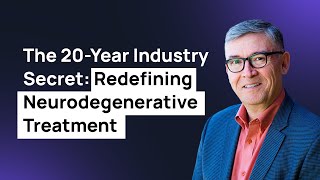
Cuong Do arrived in the United States at age nine from Vietnam with twenty dollars and no English. He started doing medical research at fourteen. He went on to Dartmouth, built new practices at McKinsey for seventeen years, ran global strategy for Samsung, co-founded a biotech that discovered a drug for Pompe disease and sold it in a successful exit — and eventually ended up as CEO of BioVie, a clinical-stage company pursuing what he believes could be one of the most important mechanisms in CNS drug development: targeted TNF alpha inhibition in the brain.
The thesis is deceptively simple. Chronic low-grade inflammation — driven by poor diet, environmental toxins, and persistent immune activation — keeps TNF alpha elevated. Elevated TNF alpha initiates a cascade that touches insulin resistance, amyloid precursor protein production, dopamine signaling, and the neuroinflammatory cycles implicated in Long COVID. One root cause. Three diseases. One drug candidate that freely crosses the blood-brain barrier and blocks TNF alpha production at the right place and time.
This conversation covers the intellectual and career journey that led Do to BioVie, the mechanics of how bezisperum works and why its CNS penetration ratio matters, what the biotech funding environment looks like from inside a clinical-stage company, and what the industry gets wrong about how to frame success in drug development.
The Inflammation Hypothesis: One Root Cause, Three Diseases
Inflammation is not inherently pathological. It is the body's first-response defense system. When an infection occurs, immune cells release TNF alpha and other cytokines to fight it off. Once the threat clears, inflammation resolves. The problem is chronic, persistent exposure — poor diet, toxins, ongoing metabolic stress — that keeps the immune system in a continuous low-level activation state. TNF alpha never fully clears. And downstream, that has consequences.
In Alzheimer's, the connection runs through amyloid precursor protein production and insulin resistance, both of which TNF alpha upregulates. In Parkinson's, the mechanism runs through insulin resistance in the brain: if you can reverse that resistance, the available dopamine in the brain becomes effective again for restoring muscle control. In Long COVID, researchers have identified that even after the active infection clears, spike proteins and viral fragments continue circulating, driving persistent immune activation — and the same inflammatory pathway.
What makes BioVie's candidate unusual is not just the mechanism, but the delivery. Bezisperum is a small molecule that crosses the blood-brain barrier at nearly a one-to-one ratio between CNS and blood concentrations. It does not bind to amyloid or require clearing back through the blood vessels. It works directly at the source of TNF alpha production in the brain — without the brain swelling and bleeding risks associated with large-molecule antibody approaches that have to cross and recross the blood-brain barrier.
Do is candid that this was partially luck. The original team that brought bezisperum into the clinic was testing it for diabetes. The diabetes trial worked — insulin resistance reversed, HbA1c normalized. But once they understood the mechanism, they saw clearly that the molecule played a much larger role in CNS than it ever would in metabolic disease. BioVie acquired the asset, Do championed the deal from the board level, and the pivot into neurological conditions followed.
Why Amyloid Dominated — And What It Cost
Do started working in Alzheimer's research in the late 1980s. He remembers a time when inflammation was already a known factor — it was simply not actionable. There were no drugs to target it. Funding was scarce. And when you have limited resources and competing hypotheses, the field picks a horse.
Amyloid was that horse. The correlation between Alzheimer's and elevated amyloid burden was real and strong. The hypothesis — that amyloid was the cause, and removing it would improve cognition — was testable. And over time it became entrenched. NIH grant applications in Alzheimer's today still effectively require a connection to amyloid or tau to be competitive. Do describes it as a monster: self-reinforcing, self-funding, practically immune to alternative framings.
At Merck, he oversaw an Alzheimer's BACE inhibitor program — the only molecule ever created capable of inhibiting that enzyme. The trial cost a billion dollars. The probability of success going in was twenty-five to thirty percent. It failed. He is clear-eyed about this: that is how science works. You test plausible hypotheses. Some fail. The problem is when failure does not update the field's priors.
The emerging view — now gaining critical mass — is that amyloid plaques and tau tangles are not themselves the toxic agents causing neurodegeneration. They may trigger inflammation. But so do many other factors. And all of those factors converge on the same pathway: NF-kappa B activation, TNF alpha production, and the downstream cascade BioVie's drug candidate is designed to interrupt.
Designing Trials That Work: Objectivity and Minimizing Variability
One of the underappreciated dimensions of this conversation is Do's rigor on clinical trial design, sharpened by decades of watching trials fail for preventable reasons.
His framework is straightforward: great trials test a hypothesis with objective, quantifiable endpoints that minimize variability. Cognition in Alzheimer's — the primary endpoint for most major trials — fails both criteria. It is subjective, affected by daily variables like sleep and headache, and incredibly difficult to measure consistently across a patient population. That variability kills trials. It swamps the signal.
Parkinson's is more tractable. Muscle control can be observed directly. The metrics are objective and countable. And changes manifest in weeks, not years — BioVie's current Parkinson's trial runs three months. That translates into cost efficiency that is essential for a company managing limited capital. Do's priority stack right now: Parkinson's and Long COVID first, because both offer short timelines and objective endpoints. Alzheimer's Phase 3 trials are paused pending additional funding.
The inclusion and exclusion criteria piece matters equally. Making the trial population as homogeneous as possible — same disease stage, same biomarker profile, similar symptom burden — eliminates the apples-to-oranges comparison problem. This is where BioVie's chief medical officer, who ran J&J's psychiatry program and got the first ALS drug approved, provides an edge. CNS trial design expertise is not abundant. The ability to execute on it is a real competitive differentiator.
The Biotech Funding Crisis and the Pipeline Problem
Do describes the current capital environment as the worst he has seen in his career. The dynamic is structural: during COVID, biotech euphoria funded companies that should not have been funded, on scientific hypotheses that were not fully validated before the money went in. Many of those programs failed. The VCs that backed them took losses. LP capital calls went unmet. And the pullback has been total.
The current threshold for institutional investment has effectively become Phase 2 data. If you do not have a clinical asset with Phase 2 proof, most funds will not take a meeting. For early-stage biotech, that is existential. And the downstream consequence — which Do names plainly — is a pipeline problem. No early-stage companies now means no mid-stage companies in two to three years means no late-stage companies after that. The spigot has closed at the wrong end of the development pipeline.
The irony is that for well-capitalized acquirers, the environment presents extraordinary value. Valuations are compressed. Assets are available. Do notes that Novo Ventures is actively deploying — one of the few institutional investors still moving. His view: if you have a billion dollars and a long horizon, now is the time to buy. The assets are there. The prices are right. The question is whether enough capital follows that logic fast enough to keep the pipeline from hollowing out.
Future Technologies: BBB Crossing and Personalized Oncology
On what comes next, Do is most excited about technologies that enable more predictable blood-brain barrier crossing — a problem that has historically constrained the entire CNS development space. As BBB crossing becomes more engineered and reliable, the universe of potentially effective brain therapeutics expands significantly.
He is also watching emerging oncology modalities that are highly personalized to individual patients — particularly for solid tumors and neuroendocrine carcinomas, which remain among the hardest-to-treat cancers. The emerging technologies for targeting these are beginning to come into clinical use, and he believes the next decade will see meaningful advances in diseases that have historically had almost no options.
On gene therapy: he thinks the first generation got stuck on cross-correction problems that are now beginning to be solved. Good drugs can survive bad class sentiment if the science holds. He is watching for the modalities that can prove it.
What Does Success Look Like?
The question Do says he does not get asked enough — and should be asked more — is: what does success look like? In pharma and biotech, he argues, there is too much focus on downside risk management and not enough on keeping the vision of a transformative outcome clearly in view. When you know what success looks like, you make better bets on what is worth pursuing and what to deprioritize. The "What Does Success Look Like" framework, in his telling, is a discipline for staying oriented toward the outcomes that actually matter.
For BioVie, success looks like the first truly effective drug for Alzheimer's. The first new Parkinson's therapy in over five decades. The first treatment for Long COVID. Those are the goals that justify the capital allocation, the delayed timelines, and the ongoing difficulty of operating in the hardest funding environment Do has seen. The clarity of that vision is what keeps the work grounded.
What You'll Learn
- Why TNF alpha may be the hidden link between Alzheimer's, Parkinson's, and Long COVID
- How to design effective clinical trials by minimizing variability and selecting objective endpoints
- The critical advantage of small molecules that can cross the blood-brain barrier
- Why the amyloid hypothesis dominated Alzheimer's research and what we've learned since
- How biotech funding challenges are creating a pipeline problem for future drug development
- The "What Does Success Look Like" framework for maintaining focus on transformative outcomes
- Why continuous infusion delivery systems can improve safety profiles of existing drugs
- How to evaluate and acquire promising biotech assets through scientific due diligence
- Why Parkinson's trials can be more cost-effective than Alzheimer's studies
- The emerging technologies reshaping CNS drug development
Episode Highlights
- [00:00] Intro and Early Career Journey: From Vietnam to Medical Research
- [04:32] Building a Career Across Industries: Leadership Principles in Tech and Healthcare
- [09:48] The Reality of Biotech Startups: Challenges and Unexpected Discoveries
- [13:38] BioVie's Evolution: From Liver Disease to CNS Breakthroughs
- [17:03] The Inflammation Connection: Linking Alzheimer's, Parkinson's and Long COVID
- [21:18] Clinical Trial Design: Balancing Cost, Time and Measurable Outcomes
- [27:21] Small Molecules vs Antibodies: Advantages in Blood-Brain Barrier Access
- [35:33] The Biotech Funding Crisis: Challenges and Future Implications
- [41:04] Future of Drug Development: BBB Crossing and Personalized Medicine
- [45:22] Defining Success: Moving Beyond Risk to Transformative Outcomes