Most clin ops teams are still figuring out AI in clinical trials. Here's the truth: It's not going to magically solve your enrollment problems or replace your study coordinators.
But it can absolutely transform how you work… if you know where to look.
The difference isn't access to AI tools. It's understanding which problems AI actually solves versus which ones require human judgment, regulatory expertise, and that irreplaceable clinical intuition we've spent years developing.
Let's cut through the marketing noise and focus on six practical ways AI can genuinely improve your clin ops workflow… without replacing what makes you invaluable.
The Mundane Magic: Where AI Actually Shines
The best AI applications in clin ops aren't the flashy ones. They're quietly handling the repetitive work that steals hours from your day.
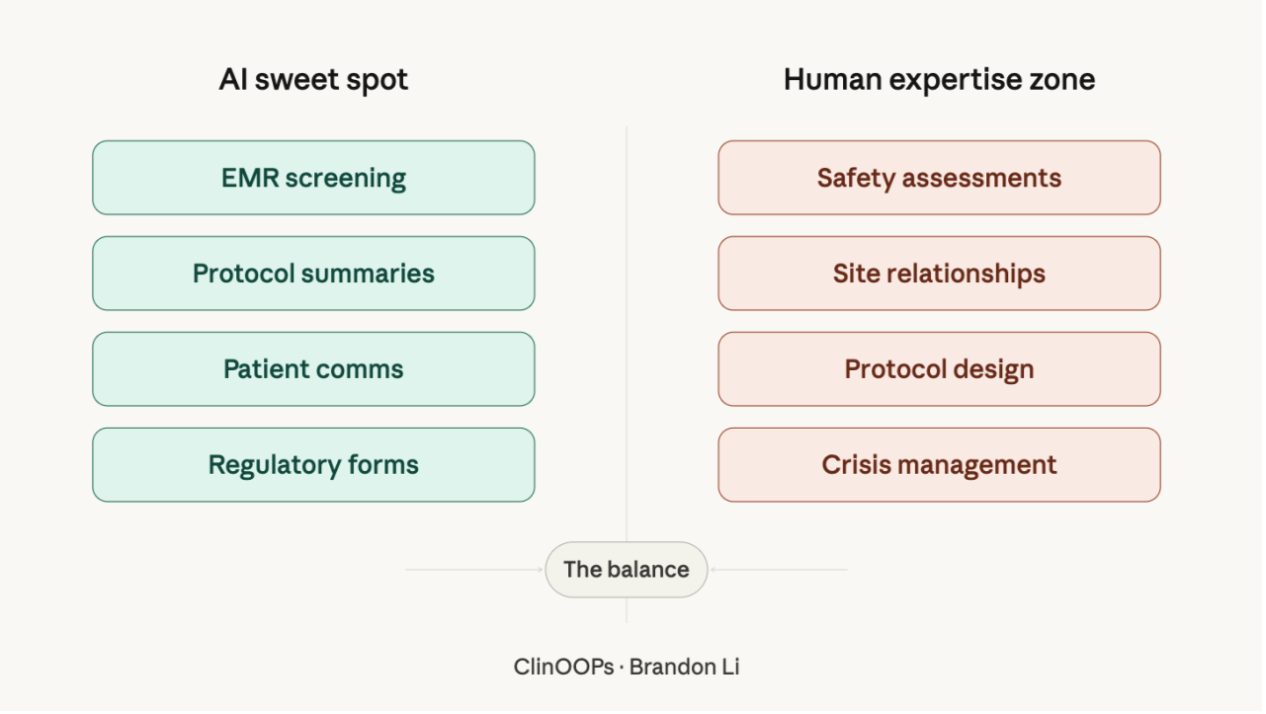
Here's the pattern: AI excels at tasks with high volume, clear patterns, and minimal regulatory complexity. It struggles with nuanced decisions requiring therapeutic area expertise or regulatory interpretation.
Think of AI as a reliable junior research coordinator: excellent at following detailed instructions, but not seasoned enough to make judgment calls between the lines.
One important note: Always ensure your AI platform meets HIPAA, SOC 2, and FDA 21 CFR Part 11 requirements before processing any trial data. Data privacy and regulatory compliance are not testing grounds to "move fast and break things."
1. Protocol Analysis & Summary Generation
The Problem: Protocols are getting increasingly complex and lengthy while sponsor pressure to accelerate timelines often intensifies.
The AI Solution: Upload your protocol, get structured summaries in minutes.
(Potential) Real-World Applications:
- Extract inclusion/exclusion criteria into searchable tables
- Generate patient-friendly study overviews
- Create site training materials from protocol sections
- Translate key eligibility points into multiple languages
Quick Win (for sites): Next time you receive a protocol amendment, use AI to quickly identify what changed rather than doing line-by-line comparisons.
The Human Element: You still need to verify medical accuracy and ensure regulatory compliance… AI doesn't truly understand ICH-GCP nuances or the subtleties of patient safety monitoring.
2. EMR Pre-Screening & Patient Identification
This is where AI genuinely saves up to months of coordinator time.
The Reality: Manual medical record reviews take 2–4 hours per patient. AI can pre-screen records in minutes, flagging likely matches and obvious exclusions.
What's Actually Working: At Power, our AI pre-screening filters out ~80% of unqualified referrals before they ever reach sites, completing full protocol eligibility assessment within 30 minutes of patient EMR submission. We've seen 71% of patients willingly consent to share their medical records for AI analysis — a level of trust that enables rapid, accurate screening.
Practical Applications:
- Identify patients with specific diagnostic codes
- Extract relevant lab values and medication histories
- Flag potential eligibility concerns before human review
- Organize medical timelines chronologically
Critical Note: AI outputs require human verification for accuracy and clinical context. It's pre-screening, not final determination.
ROI Connection: If AI helps coordinators review 3x more records in the same time, that directly impacts your pipeline flow and can potentially prevent those month-3 enrollment plateaus.
3. Patient Communication That Actually Resonates
The Problem: Generic patient materials lead to higher dropout rates and confused participants.
The AI Solution: Personalized, accessible communication that reduces burden and improves comprehension.
What Works:
- Convert medical jargon into plain language explanations
- Generate FAQ sections based on common patient concerns
- Create visit reminder templates tailored to specific therapeutic areas
- Draft informed consent summaries (with proper legal review)
Example: Instead of "participants will undergo pharmacokinetic assessments," AI helps you write something like "we'll take small blood samples to see how your body processes the study medication."
The Limit: AI can't replace the coordinator's ability to sense patient anxiety or address complex emotional concerns about trial participation. The human connection remains irreplaceable.
4. AI-Powered Clinical Trial Liaison Agent
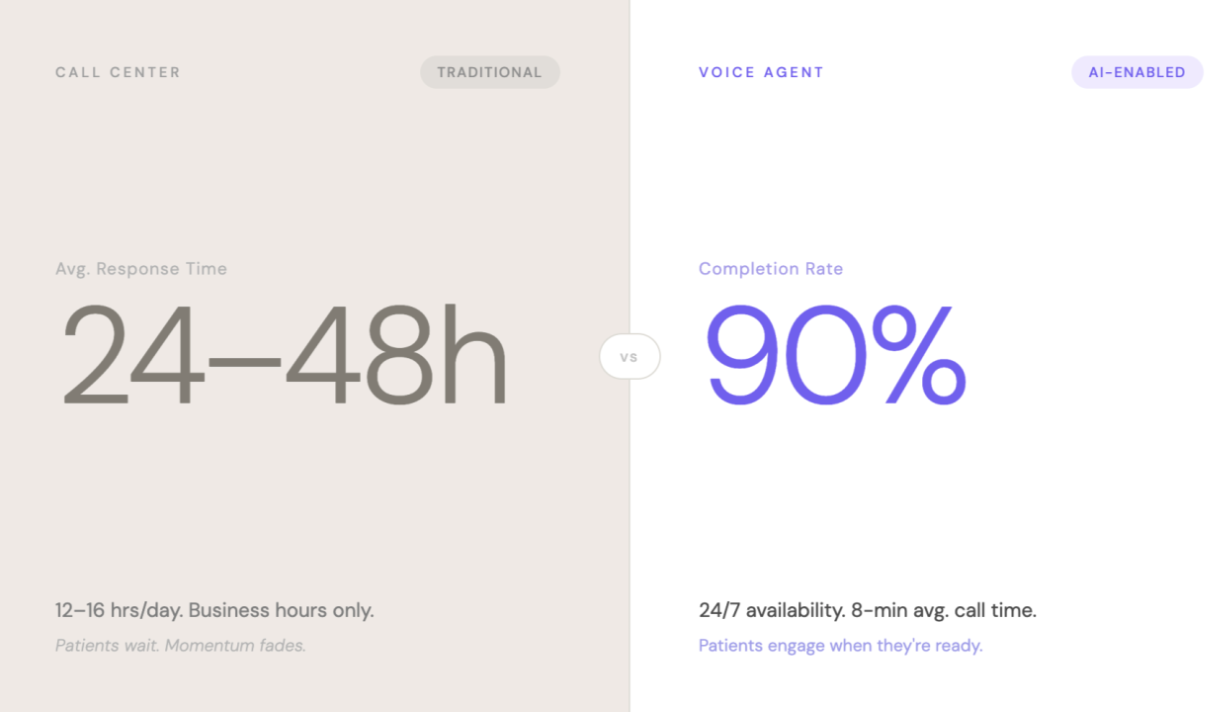
One reason sites struggle with patient flow is inconsistent support and communication gaps during off-hours.
The AI Solution: Train an AI agent on your protocol and study procedures that sites can access 24/7 for immediate support.
What It Handles:
- Answer basic protocol questions instantly
- Provide eligibility criteria clarifications
- Guide coordinators through standard procedures
- Escalate complex issues to the sponsor team during business hours
The Value: Sites get immediate answers to routine questions instead of waiting for email responses or scheduled calls. The AI handles documentation and FAQs so your team can focus on relationship building and more complex problem-solving.
Reality Check: This works for straightforward procedural questions, but sites still need human expertise for nuanced protocol interpretation and relationship management.
5. Competitive Intelligence & Literature Monitoring
The Manual Challenge: Staying current with competitive trials and emerging data across multiple therapeutic areas while managing active studies.
AI's Advantage:
- Monitor trial registrations for similar studies
- Track published results in your indication
- Alert you to protocol modifications by competitors
- Summarize conference abstracts and FDA approvals
Strategic Value: Early awareness of competitive enrollment challenges helps you adjust recruitment strategies and site allocation decisions.
Human Insight Required: Understanding market implications and strategic responses requires experience that AI can't replicate.
6. Regulatory Document Preparation
The Tedious Reality: IRB submissions involve countless forms, repeated information, and version control headaches.
AI's Practical Role:
- Auto-populate submission forms from protocol data
- Generate consistent investigator CVs and site documentation
- Create submission checklists tailored to specific IRB requirements
- Draft initial responses to IRB queries (requiring expert review before submission)
Time Savings Example: Creating a complete IRB submission package drops from 8 hours to 2 hours, with AI handling data entry and formatting while you focus on scientific content.
Non-Negotiable: Regulatory decisions and final submissions still require human expertise and accountability.
The "AI Can't Do This" List
Let's be clear about AI's limitations in clin ops:
Regulatory Decisions: AI doesn't fully understand FDA guidance nuances or EMA submission requirements.
Patient Safety Assessments: Evaluating adverse events should always require clinical judgment and therapeutic expertise.
Site Relationship Management: Building trust with investigators and coordinators is fundamentally human.
Protocol Design: Creating scientifically sound endpoints requires deep therapeutic knowledge.
Budget Negotiations: Understanding market rates and vendor relationships isn't algorithmic.
Crisis Management: When enrollment stalls or safety concerns arise, experience trumps automation.
Quick Win Implementation Strategy
Week 1: Start Small — Pick one repetitive task (competitive intel works well) and test AI assistance.
Week 2: Measure Impact — Track time savings and quality improvements. Document what works.
Week 3: Build Thoughtfully — Add one more AI application, focusing on tasks with clear success metrics.
Week 4: Train Your Team — Share what works (and what doesn't) with coordinators and project managers.
Never: Replace human expertise with AI outputs without proper oversight.
What This Means For You
AI in clin ops isn't about replacement… it's about time multiplication. The most successful teams use AI to handle routine tasks faster, giving them more time for strategic thinking, relationship building, and complex problem-solving.
- AI handles the documentation so you can focus on the decisions.
- It manages the data entry so you can interpret what matters.
- It drafts the communications so you can perfect the relationships.
The future belongs to clin ops professionals who thoughtfully integrate AI into their workflow while maintaining the clinical expertise, regulatory knowledge, and patient focus that make them irreplaceable.
Start with one small application this week. See what works. Build from there.
Because while AI can't run your trials, it can definitely reduce tedious tasks and free up your team to focus on why we're all here: the patients.
Want more tactical AI insights for clin ops? Reach out at brandon@withpower.com with your biggest time-consuming task.